
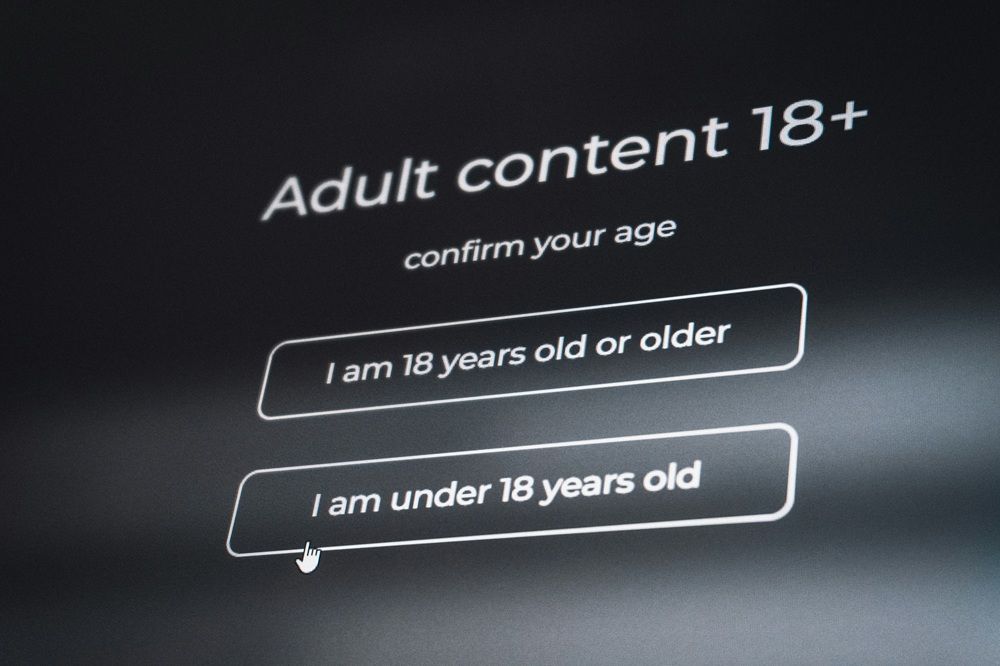
The promise was simple: a quick selfie, an AI-powered scan, and the internet becomes a safer place for minors. Governments are mandating it, social media giants are scrambling to implement it, and regulators are touting it as the silver bullet for online safety. The new age of digital trust has arrived.
Or has it?
Behind the slick marketing of age verification applications lies a complex reality of inaccurate algorithms, massive privacy risks, and an escalating war of attrition between developers and users who are determined to stay anonymous. For the adult industry and any creator whose livelihood depends on unrestricted access this technological "solution" is rapidly becoming a business-ending crisis.
This is not a story about protecting children. This is a story about broken technology, systemic bias, and the quiet erosion of privacy.
The Uncomfortable Truth About AI Accuracy: NIST and the Real Numbers
When governments tout age verification, they often point to glowing reports from the National Institute of Standards and Technology (NIST). In the latest NIST Face Analysis Technology Evaluation (FATE), companies like Yoti, Idemia, and Cognitec have made significant gains. The best algorithms now boast Mean Absolute Errors (MAE) as low as 1.3 to 1.5 years. For a 16-year-old, that suggests the system will guess their age within a range of about 14.5 to 17.5 years.
But the industry's own leaders admit this is misleading. The Age Verification Providers Association notes that the test data is "not the same quality as is used in real-world implementations". While Yoti claims a MAE of 2.06 years for 13-to-16-year-olds in the NIST tests, the 10th best vendor has an MAE of 3.86 years. That means many systems are off by nearly four years a margin that renders the technology useless for distinguishing between a 15-year-old and a 19-year-old.
Furthermore, the practical implementation often requires a "buffer threshold." The Australian government's own $6.5 million trial found that companies may need to provide multiple options, such as ID checks, "when age estimation technology fails". The report concluded bluntly: "False negatives will then be inevitable and alternative methods will be required to correct them".
NIST vendor MAE comparison – Top vendor achieves 2.06 years MAE for 13-16 age group; the 10th vendor's MAE is 3.86 years
The Racial and Gender Bias Problem
The most damning critique of AI age estimation comes from its performance across demographic groups. A Guardian analysis of the Australian trial data revealed that age estimation software is significantly less accurate for people with Indigenous or Southeast Asian backgrounds. Young people from these backgrounds are more likely to be miscategorized as over the age limit, while older adults are flagged as underage.
Specifically, the accuracy rate for Indigenous people was 7 percentage points lower than for people categorized as having an "Oceania and Antarctica" background. For Southeast Asian users, the accuracy rate was 5 percentage points lower. This means the software is effectively imposing a digital barrier that falls hardest on already-marginalized communities.
Recent studies have confirmed that AI systems are simply reflecting societal biases. A 2024 study found that minors from East and West Africa were misclassified as older than they were compared to minors of the same age from other regions, indicating that darker skin tones are perceived by AI as being older than they actually are. The same study demonstrated that false positive rates are higher for women than men, meaning more underage girls are misread as adults.
The Australian report even noted "some known challenges in accuracy for underrepresented skin tones or facial features". Yet the government summary downplayed these differences, claiming systems performed "broadly consistently" across demographics a claim contradicted by their own raw data.
Indigenous and Southeast Asian users face 5-7 percentage point lower accuracy rates compared to other groups – AI age checks are disproportionately less accurate for marginalized communities
Bypassing the System: The Cat-and-Mouse Game
If the technology were accurate, it might be worth the privacy risk. But it is demonstrably fragile in the face of determined users. Security researcher Paul Moore recently bypassed the EU's flagship age verification app for the third time, exploiting a Chrome extension powered by ClaudeAI.
The flaw is architectural: because the EU app is designed for "privacy-preserving" verification, it issues an anonymous "over 18" attestation without tying it to a specific user identity. Moore's extension simply intercepts and replays that attestation, turning a single successful verification into a reusable "adult access pass". As Moore noted, this is not a bug; it is a "structural mismatch between privacy requirements and enforcement needs".
The bypass methods are even cruder in real-world testing. A University of Melbourne study found that every face-scanning tool they tested could be tricked with repeated attempts using simple disguises including $20 "old man" masks purchased online. Professor Cohney, who led the research, noted that while most tactics didn't work on the first try, "with repeated attempts... assuming that you get to keep trying to prove that you're over a given age, you can probably get away with it".
The UK's age check laws went viral for all the wrong reasons within days of implementation. Reddit users shared tutorials on how to submit AI-manipulated images or found driving license examples online that were "accepted with no issues". One user even became "Mr Mozahid from London, born in Oct 1989" by simply uploading an example license image found via search engine.
EU age verification app bypassed with Chrome extension exploiting anonymous attestation weakness – The structural mismatch between privacy and enforcement enables easy replay attacks
The Privacy Nightmare: A "Pointless Risk"
The Georgia Institute of Technology and UC Irvine recently published a study that ripped apart the security claims of age verification providers. The researchers found that the vast majority of websites covered by these laws do not actually enforce age verification. When they do comply, users are routed through third-party services like Yoti, which handles an estimated 60% of all age verification requests.
"Companies that employ online age verification claim their products function the same way [as a bartender checking an ID]," the study notes. "The reality is starkly different".
A verification attempt via Yoti may transmit IP addresses, OS metadata, and browser fingerprints sufficient to "uniquely identify and track devices". This data flows to credit card companies, IP geolocation services, and even data brokers.
The Electronic Frontier Foundation (EFF) has been particularly vocal: "Age-verification systems are, at their core, surveillance systems". For the 43% of transgender Americans who lack identity documents that correctly reflect their name or gender, these systems create an impossible choice: provide dead names and incorrect gender markers, or lose access to the internet entirely. Domestic abuse survivors, journalists, activists, and whistleblowers lose the anonymity that keeps them safe.
Discord's recent experience is a cautionary tale. When the platform announced its global age verification rollout, users pointed directly to a recent security breach where a third-party provider exposed the government ID photos of 70,000 users. The backlash forced Discord to delay the rollout and promise that for 90% of users, "nothing changes" a concession that undermines the entire purpose of the verification.
The Human Cost: How the Adult Industry Is Being Bled Dry
The consequences of these flawed systems extend far beyond teenagers sneaking onto social media. The Woodhull Freedom Foundation found that 33% of sex educators working in states with age verification mandates have already seen their work impacted. Nearly three-quarters (73%) are concerned that these laws will restrict access to vital educational resources and 76% fear they could be used to target sex education and related materials.
"Again and again, we were told this was only about keeping minors from accessing porn," said Woodhull's CEO, Ricci Joy Levy. "Woodhull warned these vague and overly broad policies would also result in censorship of vital, non-explicit information about sex and gender, and the data bear this out".
Separate research from adult industry firm SWR Data surveyed 500 creators and found that nearly half (45.2%) reported decreased income, with 98% of those who lost income citing difficulties related to the "War on Porn" a blanket term for age verification and content bans.
Two separate studies last year confirmed that age verification laws do not actually keep children off of adult sites. Users simply turn to VPNs, non-compliant websites, or exploit the very bypasses described earlier. As one expert succinctly put it: "Age-verification is working to hurt sex workers and sex educators".
45.2% of adult creators reported decreased income; 98% of those cited age verification and content restrictions as the cause
What's Broken and Why
The fundamental problem is that the technology is structurally flawed. The two main approaches age estimation and age verification each have fatal weaknesses:
Age Estimation (Facial Scans)
-
Accuracy issues: Off by 1.3 to 3.86 years depending on the vendor
-
Bias: Less accurate for Indigenous, Southeast Asian, female, and darker-skinned users
-
Bypass: Fooled by masks, repeated attempts, and AI-generated faces
Age Verification (ID Uploads)
-
Privacy risk: Exposes government IDs, biometrics, and metadata to third parties
-
Exclusion: 43% of transgender Americans lack matching ID; unhoused youth and foster children cannot participate
-
Breaches: Yoti processes 60% of all requests single point of failure for massive data exposure
The Australian report summarized the situation well: "We did not find a single ubiquitous solution that would suit all use cases". The industry itself acknowledges that a layered, "waterfall" approach is necessary starting with low-assurance checks and escalating only when uncertainty is high. But this introduces complexity, cost, and new data collection vectors.
The Way Forward: Reusable Credentials and Privacy by Design
Some companies are exploring alternatives. Concordium, for example, has developed a blockchain-based solution where users verify their identity once and then reuse it to prove specific attributes (like being over 18) without revealing personal data. The system issues cryptographic proofs that are verifiable without exposing the underlying identity documents.
This approach mirrors the "AgeKey" concept proposed by privacy advocates: reusable credentials stored in a password manager to minimize sharing data across platforms. The goal is to reduce the number of times a user must hand over sensitive information to third parties.
However, even this approach has weaknesses. As Moore's bypass of the EU app demonstrated, if the cryptographic proof is not strongly bound to the user's identity and session, it can be intercepted and replayed.
The Bottom Line
Online age verification is an illusion. The technology is biased, the privacy protections are insufficient, and the bypasses are trivial. It is not keeping minors off adult sites, but it is hurting educators, creators, and marginalized communities.
The fundamental tension remains: you cannot build a system that is both private and enforceable. Either you collect enough data to verify identity (creating a surveillance risk), or you preserve anonymity (creating a bypass risk). Policymakers refuse to acknowledge this trade-off.
For now, the adult industry and its users are left to navigate a fragmented web of inconsistent state laws, VPN usage, and non-compliant platforms. The "Balkanization of the U.S. web" is already here. Close your laptop in New York before a flight to Dallas, and try to load the same web page you now see two different results.
The age verification experiment is failing. The question is not whether we need to protect children online we do. The question is whether we are willing to sacrifice privacy, equity, and free expression for a system that doesn't even work.