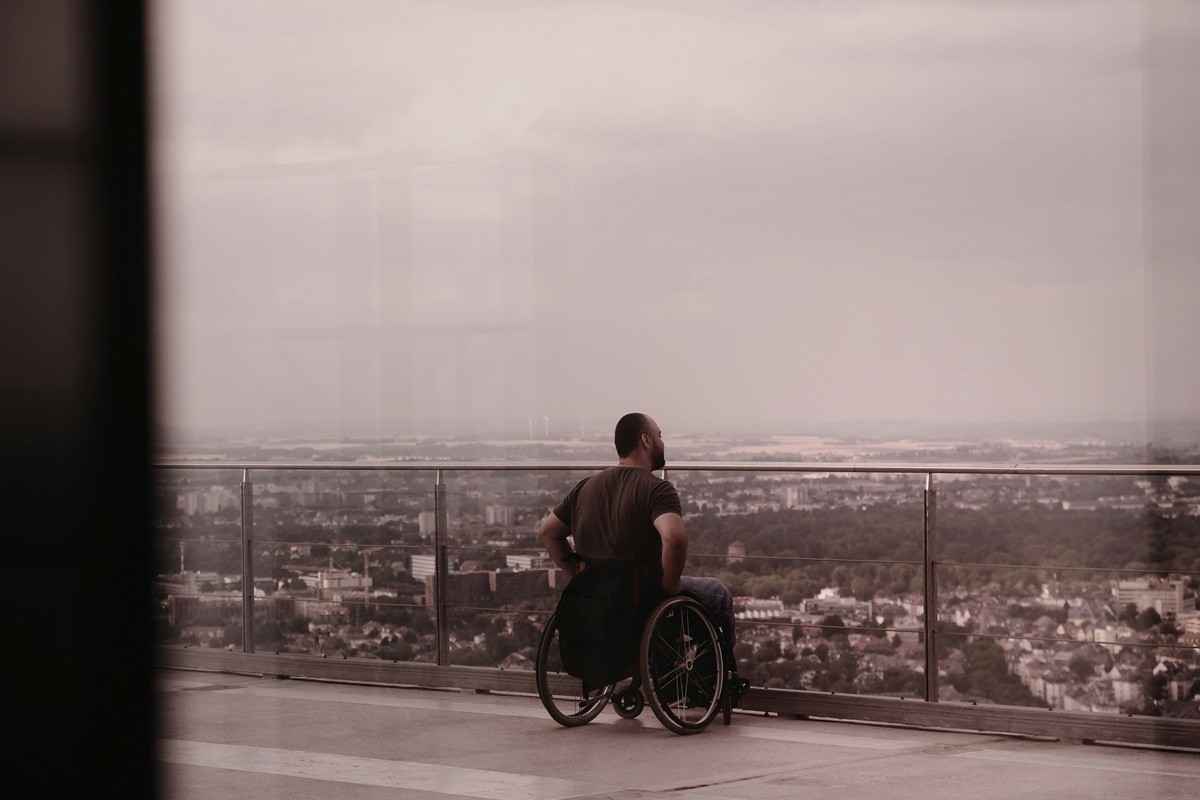
There is a quiet cruelty in the way the world talks about sex, because it pretends it is something universal, something natural, something that simply happens to everyone sooner or later, as if desire automatically leads to fulfillment, as if longing is always eventually answered, but for millions of people that promise never arrives and never will, and the silence around this reality is perhaps more painful than the reality itself, because it forces those who are left out to carry not only their loneliness but also the illusion that they are alone in it, that they are somehow exceptions, failures, or mistakes in a system that was never designed to include them in the first place.
When Life Passes Without Being Touched
There are people who go through decades of life without ever feeling what it is like to be wanted physically, not once, not even briefly, not even by accident, and this is not because they lack desire or humanity or emotional depth, but because the world filters people through invisible standards of attractiveness, confidence, health, and social ability, and those who fall outside of those standards often find themselves locked out of intimacy entirely, watching from the outside as others move through relationships, through touch, through closeness, as if it were the most natural thing in the world, while for them it remains something abstract, something distant, something they can imagine but never reach.
This reality affects older people whose bodies have changed in ways society no longer celebrates, people whose partners are gone or who never had one to begin with, individuals living with physical disabilities who depend on others for basic movement but whose emotional and sexual needs are treated as nonexistent, people with intellectual differences who feel deeply but are rarely seen as capable of intimacy, and those who simply do not fit the narrow, often cruel expectations of beauty and confidence that modern culture constantly reinforces.
The Invisible Weight of Rejection
Living without intimacy is not a neutral state, it is not simply an absence, it becomes a presence in itself, something heavy, something that grows over time, something that reshapes how a person sees themselves and the world around them, because when someone is never chosen, never desired, never touched with genuine interest, it slowly transforms into a quiet internal narrative that says you are not enough, that you are not worthy, that something about you disqualifies you from one of the most basic human experiences.
That kind of internalized rejection does not stay contained, it spreads into every part of life, into confidence, into social interaction, into mental health, into the ability to even imagine being accepted by another person, and over time it can turn hope into resignation, curiosity into fear, and desire into something painful rather than something beautiful, because wanting something you believe you can never have is one of the most difficult emotional states a person can live with.
A World Full of Frustration That No One Counts
There are no exact numbers, but the scale of this issue is far greater than most people are willing to admit, because it exists in the background of society, unmeasured, unspoken, and often deliberately ignored, yet when you look closely at rising loneliness, increasing rates of depression, social withdrawal, and emotional instability, it becomes clear that there is a growing population of people who are disconnected not only emotionally but physically as well, people whose needs are not being met in any meaningful way.
This creates a kind of silent pressure within society, because unmet needs do not disappear, they transform, they build, they seek expression in other ways, sometimes through withdrawal and apathy, sometimes through anger and resentment, sometimes through unhealthy coping mechanisms, and sometimes through a deep, quiet sadness that never fully surfaces but never truly goes away either.
The economic impact of this is rarely discussed, yet it exists in the form of increased mental health care, reduced productivity, social fragmentation, and the long-term consequences of a population that feels increasingly disconnected from one another, because a society where people feel unseen and untouched is not a stable one, it is one that slowly loses cohesion, empathy, and trust.
The Only Option Many People Have
For some individuals, there is no natural path toward intimacy, no dating life, no opportunities to build connection, no realistic way to experience physical closeness through traditional means, and for them, the only possible door that exists is through the services of a sex worker, not as a first choice, not as something shallow or transactional in their eyes, but as the only available path toward experiencing something that others receive freely without ever having to think about it.
In that context, the experience is not just physical, it carries emotional weight, it represents validation, recognition, a moment where someone is not invisible, a moment where their existence is acknowledged through touch, through presence, through attention, and that moment can have a profound impact on how they see themselves afterward, even if it is temporary, even if it is structured, even if it is something society chooses to judge rather than understand.
The Moral Contradiction No One Resolves
There is a deep contradiction in how society approaches this issue, because on one hand it promotes sexual freedom, self-expression, and the importance of intimacy for well-being, while on the other hand it restricts or stigmatizes the only realistic avenue through which some people can access that same experience, effectively creating a system where intimacy is celebrated for some and denied to others, not by law alone but by culture, by stigma, and by collective discomfort with the idea that not everyone has equal access to connection.
This raises a difficult question that many prefer not to answer, which is why it is considered wrong for someone who has been excluded from intimacy their entire life to seek it in a consensual, controlled, and mutually agreed environment, why the act of wanting to feel human in this way is framed as something shameful rather than something understandable, and why compassion often disappears precisely where it is needed the most.
What This Really Comes Down To
At its core, this is not about sex in the simplistic way it is often portrayed, it is about dignity, about recognition, about the fundamental human need to feel seen, desired, and connected to another person in a physical as well as emotional sense, and when that need is completely denied, not temporarily but permanently, it leaves a mark that goes far beyond frustration, it shapes identity, it shapes mental health, it shapes how a person experiences life itself.
The people who live without ever being touched are not statistics, they are individuals with inner worlds just as complex, just as emotional, just as human as anyone else, and yet their reality is often dismissed, minimized, or ignored because it does not fit into the narratives that society prefers to maintain.
A Question That Should Not Be Ignored
If intimacy is such an essential part of human well-being, if connection is something we recognize as deeply important, then it is worth asking why access to it is so uneven, why some people are expected to live without it entirely, and why the only possible solutions available to them are often restricted or condemned.
Because in the end, this is not just about fairness, it is about what it means to be human, and whether we are willing to acknowledge that humanity fully, even when it makes us uncomfortable, even when it challenges our assumptions, and even when it forces us to confront the fact that the world is not as equal as we like to believe.