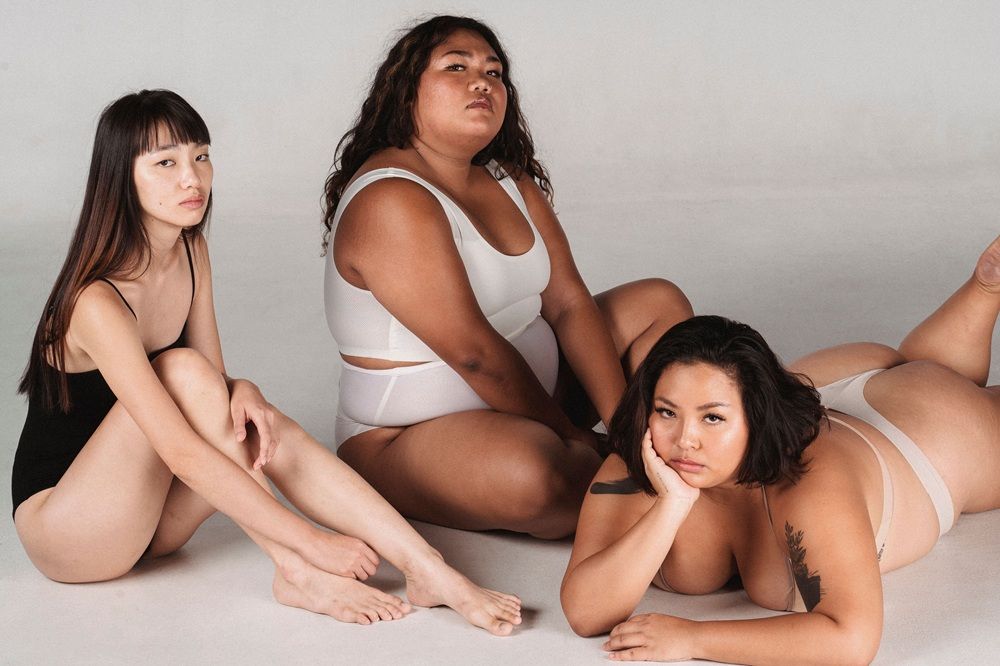
Every curve tells a story. Every scar holds history. Every body deserves respect especially in spaces built around human connection and intimacy.
The adult entertainment and escort industry is, at its core, a business built on attraction, desire, and human connection. Yet paradoxically, it has become one of the most fertile grounds for some of the most vicious body shaming, exclusionary commentary, and outright dehumanization that exists online and offline. This has to change and those of us who are part of this world have both the power and the responsibility to change it.
This article is a call to action. It is a reminder that every person working in the sex industry regardless of their size, shape, skin color, age, gender identity, or sexual orientation is worthy of dignity, respect, and celebration. Body shaming is not a harmless side effect of a competitive industry. It is a form of violence. And silence in the face of it makes us complicit.
What Is Body Shaming, and Why Does It Thrive in the Sex Industry?
Body shaming is the act of making negative, unsolicited, and often deeply cruel comments about another person's physical appearance. It can take many forms: mocking someone's weight, ridiculing their skin tone, degrading someone for their age, criticizing the shape of their nose, the size of their breasts, the presence of stretch marks, the visibility of cellulite, or the darkness of their complexion.
In the general population, body shaming is widely recognized as harmful. Campaigns against it have reached mainstream media, schools, and corporate boardrooms. Yet in the adult entertainment and escort industry, it often goes unchallenged or worse, it gets normalized under the guise of "client preference" or "market feedback."
The reasons for this are complex. Sex workers are frequently operating in legal grey areas, which means they have limited access to formal HR protections, union representation, or anti-discrimination mechanisms. They are also, too often, viewed by broader society as less deserving of protection. This creates a perfect storm: a community of people who are already marginalized, operating in an environment where cruelty has been quietly institutionalized.
But here is the truth that the industry needs to hear: preference is not permission to be cruel. There is a fundamental difference between a client politely selecting someone whose profile resonates with them and a person leaving a vicious, body-focused attack on a performer's page, profile, or public forum.
The Many Faces of Body Shaming in This Industry
Body shaming in the adult and escort world does not always arrive as an obvious insult. Sometimes it is subtle, systemic, and dressed up in the language of advice or concern. Recognizing its many forms is the first step toward dismantling it.
Fat-Phobia and Weight-Based Discrimination
This is perhaps the most visible form of body shaming in the industry. Performers and escorts who fall outside of conventional, narrow beauty standards face constant commentary about their weight both from clients and, disturbingly, from peers. Comments like "you'd get more clients if you lost weight" or rating systems that explicitly devalue larger bodies are not just unkind they are discriminatory. The demand for intimacy, connection, and pleasure does not belong exclusively to those with bodies that fit a particular mold.
Colorism and Racism Wrapped in "Preference"
Racial body shaming is pervasive and particularly insidious because it is often disguised as personal preference. When users on platforms leave comments that degrade performers of color comparing their skin tone unfavorably, using racial slurs, or making deeply othering remarks about physical features this is not a matter of taste. This is racism. Escorts and performers of color regularly report being subjected to fetishizing commentary that strips them of their humanity or conversely, being told that their skin color makes them "less desirable" in language that is pure, undisguised prejudice.
Ageism: The Invisible Exclusion
The adult industry has a complicated relationship with age. While youth is often commercially celebrated, this comes at the direct expense of those who are older and the commentary directed at older escorts and performers can be vicious. Wrinkles, grey hair, and the natural changes that come with time are treated as defects rather than the natural, beautiful evidence of a life fully lived. This mirrors a broader societal failure to value older bodies, but it is amplified in an industry that commodifies physical appearance.
Attacks on Gender Identity and Sexual Orientation
Trans performers, non-binary escorts, and LGBTQ+ individuals working in the industry face a specific and particularly brutal form of body shaming that intersects with transphobia and homophobia. Comments that attack their bodies as somehow "wrong," "unnatural," or "deceiving" are not critiques they are hate speech. The bodies of transgender and gender-nonconforming individuals are not up for public debate, moral judgment, or ridicule.
The "Surgical" Conversation
There exists a deeply contradictory culture around cosmetic surgery in the adult industry. On one hand, surgical enhancement is often implicitly required to meet unrealistic beauty standards. On the other hand, those who have had procedures are mocked for being "fake" or "artificial." This creates a no-win situation in which escorts and performers are shamed for their natural bodies and then shamed again if they choose to alter them. This is not critique it is a trap designed to ensure no body is ever considered acceptable.
The Real Psychological Impact
The consequences of body shaming are not merely emotional discomfort. Research consistently demonstrates that chronic body shaming leads to serious psychological harm, including depression, anxiety disorders, eating disorders, and in severe cases, suicidal ideation. For sex workers, who often already carry the psychological weight of stigma, discrimination, and social isolation, additional body-based attacks compound existing vulnerabilities in devastating ways.
When a sex worker is told repeatedly through comments, ratings, messages, and peer interactions that their body is wrong, they internalize that message. Self-worth erodes. Professional confidence collapses. And because the industry often lacks the support structures that exist in more conventional workplaces, these individuals are frequently left to process this harm entirely alone.
Beyond individual psychology, body shaming creates a culture of fear. Escorts who feel their bodies will be publicly mocked become reluctant to post photos, to engage with clients, or to advocate for themselves when lines are crossed. This chilling effect silences voices and perpetuates a hierarchy of desirability that serves no one not performers, not clients, and certainly not the broader project of building an industry that operates with dignity and respect.
Standing Up: What "Allyship" Looks Like in Practice
It is not enough to personally refrain from body shaming. Genuine solidarity requires active intervention. When we witness a colleague being subjected to cruel commentary about their appearance, silence is a choice and it is a choice that sides with the aggressor.
Call Out, Don't Pile On
When you see a body-shaming comment on a forum, social platform, or community board, call it out clearly and calmly. You do not need to match the aggressor's energy. A simple, direct statement that the comment is unacceptable and will not be tolerated sets a clear standard.
Use the Tools Available to You
Most platforms have reporting mechanisms. Use them. Flag body-shaming content, racist commentary, transphobic attacks, and ageist remarks. Encourage others to do the same. Volume matters a single report is easy to ignore, but coordinated community reporting creates pressure on platforms to act.
Support Colleagues Publicly and Privately
Reach out privately to someone who has been targeted. Let them know they are valued. Then consider saying something publicly a positive comment on their profile, a post that reaffirms their worth. Public support is visible not only to the target but to everyone who witnessed the attack. It shifts the culture.
Refuse to Participate in Exclusionary Ranking Systems
Many forums and community spaces have developed informal or formal ranking systems that are explicitly based on body type, race, or age. Refusing to participate in these systems and saying openly why you are refusing is a meaningful act of resistance.
For Platform Owners and Directory Administrators
Those of us who run escort directories, adult platforms, and community spaces carry a specific and non-negotiable responsibility. We are not neutral parties. The communities that grow on our platforms reflect the values we enforce or fail to enforce.
Building a platform that genuinely combats body shaming requires concrete action, not just a terms of service paragraph that sits unread. Moderation policies must explicitly prohibit body-shaming content, with real consequences for violations. User reporting tools must be accessible, visible, and actually reviewed. Community guidelines should be written in plain language that makes clear what is and is not acceptable.
Beyond enforcement, platforms can actively foster inclusive culture. Featuring diverse escorts and performers prominently not just as a token gesture but as a genuine editorial commitment signals that beauty is not monolithic. Writing content that celebrates the full spectrum of human bodies, like the article you are reading right now, contributes to a cultural shift that benefits every member of the community.
Every Body Is a Beautiful Body
This is not a slogan. It is a statement of fact that the industry desperately needs to internalize.
The person who is plus-size brings something irreplaceable to every encounter. The escort who is over fifty carries wisdom, confidence, and an understanding of human desire that cannot be faked. The performer of color brings beauty and cultural richness that is a gift, not a deficiency. The trans escort who shows up authentically in their body is brave beyond measure in an industry and a world that has not always made space for them.
Beauty is not a single standard. Desire is not a single shape. And the sex industry which has always existed at the intersection of the human need for connection, pleasure, and intimacy should be a space that reflects the gorgeous, messy, infinitely varied reality of human bodies rather than enforcing a narrow, commercial ideal that leaves nearly everyone feeling inadequate.
A Community That Protects Its Own
The sex industry has a long history of looking out for itself, because it has often had no choice. External institutions governments, healthcare systems, law enforcement have regularly failed sex workers. In that context, community solidarity has not been a luxury. It has been survival.
Body shaming tears that solidarity apart. It turns community members against one another, creates hierarchies of worthiness, and weakens the collective power of a group that is strongest when it stands together. Every time we allow a peer to be publicly degraded for the appearance of their body, we erode the foundation of mutual support that this community depends on.
Protecting one another from body shaming is therefore not just an ethical choice. It is a strategic one. A community that refuses to tolerate the dehumanization of its members is a community that is harder to exploit, harder to silence, and harder to dismiss.
The Standard We Deserve
We deserve better. Escorts deserve better. Performers deserve better. Clients who come to this industry seeking genuine human connection rather than a narrow fantasy sold to them by decades of bad media representation deserve better too.
The standard we should demand is simple: every person who participates in this community, in any capacity, is treated as fully human. Their body is not public property to be evaluated, ranked, mocked, or diminished. Their appearance whatever it is is their own, and it is beautiful in its specificity, its history, and its humanity.
Negative commentary that exists only to wound, to exclude, or to enforce a hierarchy of desirability has no place here. Not in our forums. Not in our review sections. Not in our private messages. Not in our peer conversations.
When we see it, we name it. When we can report it, we report it. When someone we know has been hurt by it, we show up for them.