Beyond the Neon Glow: An Introduction
Everyone thinks they know Amsterdam's Red Light District. They picture the postcard version: narrow canal bridges crammed with selfie sticks, bachelorette sashes, and men pressing their faces against glass doors. They've seen the Instagram stories. They've read the listicles. They think De Wallen is a theme park with a pulse.
They're wrong.
The real Red Light District the one that has fascinated historians, sociologists, photographers, and travelers for centuries is something far more layered, far more human, and far more complex than anything a two-hour walking tour will reveal. Amsterdam's erotic quarter is one of the oldest continuously operating red-light areas in the world, and beneath its neon-lit surface lies a city within a city, with its own economy, subculture, architecture, history, and social code.
This guide is for the genuinely curious. For people who want to understand Amsterdam's most misunderstood neighborhood not just gawk at it.
The Geography Nobody Talks About: Three Districts, Not One
Here's the first thing most visitors get wrong: there isn't just one Red Light District in Amsterdam. There are three distinct zones, each with its own character, clientele, and atmosphere. Locals rarely lump them together.
De Wallen: The Famous One
De Wallen is the one you already know. Centered around the Oudezijds Voorburgwal and Oudezijds Achterburgwal canals in the medieval heart of the city, it's the oldest and largest, covering roughly three square kilometers of the historic city center. The window brothels here date back in various forms to the 15th century, when Amsterdam was already one of Europe's busiest port cities.
What most tourists miss about De Wallen is how it functions as a real neighborhood. Residents live here. Families walk these streets. The Oude Kerk the Old Church, Amsterdam's oldest building, dating to 1213 sits directly in the middle of the district, surrounded by windows on all sides. That juxtaposition isn't accidental or ironic. It's centuries of pragmatic Dutch coexistence made physical.
The district also contains some of Amsterdam's finest canal architecture. The narrow, leaning facades along Oudezijds Voorburgwal represent medieval merchant wealth at its peak. Walk here on a weekday morning before the crowds arrive and you'll see something extraordinary: a neighborhood simply waking up.
Singelgebied: The Quieter Quarter
South of De Wallen, near the Singel canal, lies a smaller cluster of window brothels that most tourists never find at all. Singelgebied operates at a different tempo less theatrical, less crowded, and according to many long-term observers of Amsterdam's nightlife ecosystem, more professional in its operation.
This area tends to attract a different demographic of visitor: older, more discreet, often repeat travelers to the city who have graduated beyond the theater of De Wallen and prefer an encounter that feels less like a performance.
Ruysdaelkade: The Hidden Third Zone
The third area, near the Ruysdaelkade in the De Pijp neighborhood, is arguably the least known of all three. Tucked away from the tourist corridors, it's a reminder that Amsterdam's relationship with sex work was never confined to one medieval corner of the city. This area has historically served a more local clientele and operates with minimal tourist presence.
Understanding that the Red Light District is plural not singular immediately reframes how you think about Amsterdam's relationship with its most famous export.
The History That Built the District
Sailors, Merchants, and the Making of De Wallen
Amsterdam's sex industry grew in direct proportion to its port. By the 17th century, during the Dutch Golden Age, Amsterdam was the busiest harbor in the world. Ships arrived from the East Indies, West Africa, the Americas, and every corner of Europe. Tens of thousands of sailors passed through the city annually, spending wages accumulated over months at sea.
The city's response was characteristically Dutch: practical rather than moralistic. Prostitution was never exactly legal, but it was rarely seriously suppressed. Civic authorities made periodic attempts at regulation throughout the centuries, but the industry's economic contribution to the city was too significant to dismantle.
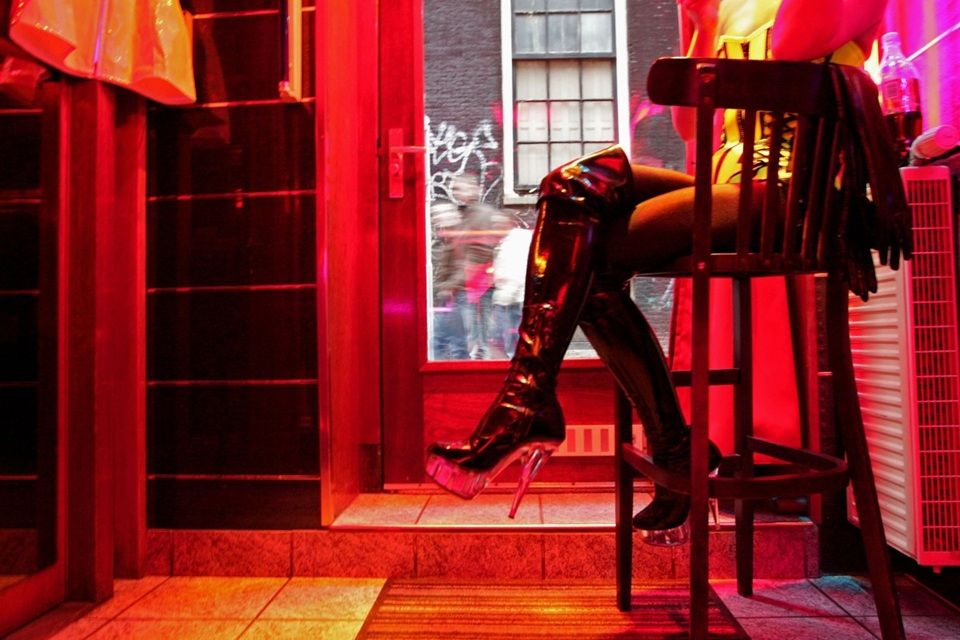
By the 19th century, the window brothel format women displaying themselves behind glass in lit doorways had become the district's defining visual identity. This format offered something important: agency. Women could work independently, set their own hours, and maintain physical separation from clients until terms were agreed upon.
Legalization and Its Consequences
In 2000, the Netherlands lifted its formal ban on brothels, making Amsterdam the first major European capital to fully legalize and regulate the sex industry. The theory was sound: legalization would improve worker safety, eliminate criminal exploitation, and bring the industry under health and labor protections.
The reality proved more complicated. Legalization made it easier to monitor legitimate operators but also attracted organized crime networks who recognized that legal cover made trafficking harder to detect. By the mid-2000s, city authorities began finding evidence that a significant portion of window brothels were controlled by criminal organizations, with women trafficked primarily from Eastern Europe and Africa.
This led to a dramatic policy reversal. Between 2007 and 2013, the city reduced the number of licensed window brothels from approximately 500 to roughly 200 under Project 1012, a major urban regeneration initiative named after De Wallen's postal code. The closures were controversial some praised them as anti-trafficking measures, others criticized them as gentrification using human rights language as cover.
The Modern District: A City Still Debating Itself
Amsterdam remains in active debate about the future of De Wallen. In 2020, city planners proposed relocating sex workers to a new purpose-built "erotic center" outside the city center a proposal that was met with fierce opposition from sex worker advocacy groups who argued it would isolate and endanger workers. The debate continues today, with no resolution in sight.
What's fascinating about this ongoing conversation is how it reflects something deeply Dutch: the willingness to have the argument in public, with sex workers at the table, rather than pretending the issue doesn't exist.
What Actually Happens Inside: Demystifying the District
The Window Brothel Experience
The mechanics of window brothel work are widely misunderstood, even among regular visitors to the district. Women rent their windows by the shift typically eight-hour blocks paying the brothel owner for the space itself. This means the financial arrangement is closer to a hairdresser renting a chair in a salon than to employment. Workers are self-employed, set their own prices, and negotiate directly with clients.
The glass doors provide both visibility and security. Most windows are equipped with alarm buttons connected directly to security services. A strict code of conduct governs client behavior: photography is absolutely forbidden, harassment results in immediate removal, and the red curtain drawn across the window means the room is occupied and no approach should be made.
Violating these norms particularly the photography rule will result in rapid and unhappy confrontation. This is not a space where tourist rules apply.
The Economy of the District
Beyond the windows themselves, the Red Light District supports an entire ecosystem of businesses. The famous coffee shops along Warmoesstraat and Zeedijk draw a crowd that has nothing to do with the windows. Sex shops, peep shows, and live show venues operate alongside conventional restaurants, bars, and the excellent Museum Ons' Lieve Heer op Solder, a hidden Catholic church tucked into a canal house attic.
The economic density of De Wallen is extraordinary. In a neighborhood of a few square kilometers, you find one of the world's great churches, some of Amsterdam's best Indonesian and Chinese restaurants, premium cannabis retailers, historic hofjes (courtyard almshouses), and a functioning harbor district.
The People Who Live Here
Perhaps the most humanizing fact about De Wallen is that people call it home. Approximately 4,000 people live within the formal boundaries of the district. They're not oblivious to what surrounds them they chose to live here, often because the neighborhood, stripped of its tourist mythology, offers beautiful architecture, excellent transport links, and genuine community.
The tension between residents, sex workers, and the tidal wave of tourism is constant. Resident groups have been among the most vocal critics of certain tourism practices not because they're anti-sex work, but because they're anti-chaos.
The International Escort Scene: A Parallel World
Alongside the visible world of window brothels exists an entirely separate ecosystem that operates above ground sometimes quite literally in the form of Amsterdam's high-end escort services. This parallel world rarely intersects with the street-level tourism of De Wallen and operates according to entirely different principles.
How the Escort Industry Differs
Where window brothels offer transparency and immediacy, the escort sector offers discretion and relationship. Clients are typically business travelers, tourists staying in the city's premium hotels, and locals seeking companionship that extends beyond a transactional encounter. The encounter might involve dinner at a restaurant on the Leidseplein, attendance at a performance at the Concertgebouw, or simply conversation in a hotel suite over expensive whisky.
International escort directories and agencies operating in Amsterdam connect clients with companions from across Europe and beyond. The industry is legal under the same 2000 framework that governs window brothels, provided escorts are self-employed independent contractors rather than employed by an agency under exploitative terms a distinction that matters enormously under Dutch labor law.
Safety, Screening, and Standards
Reputable international escort services operating in and around Amsterdam emphasize rigorous screening as a differentiating factor. Clients provide identification and sometimes professional references before first contact is made. This screening protects companions, manages reputation risk, and builds the kind of trust that generates repeat clientele.
The better-run directory services in this space present detailed companion profiles with genuine photography, clearly stated services and boundaries, independent reviews, and direct contact mechanisms that put the companion in control of every interaction.
Practical Intelligence for the Curious Traveler
When to Visit and Where to Start
The Red Light District at 2am on a Saturday exists for the stag party. The Red Light District at 10am on a Tuesday exists for everyone else. If you're genuinely interested in the neighborhood's texture its architecture, its history, its street-level social dynamics go early, go sober, and go slowly.
The Prostitution Information Centre on Enge Kerksteeg is an excellent first stop. Founded by a former sex worker and staffed by people with direct experience in the industry, it offers tours and information that have no equivalent for accuracy or nuance.
The Oude Kerk museum runs regular exhibitions that engage seriously with the neighborhood's history and present, including programming created with input from sex workers.
Navigating Respectfully
A few rules that go beyond basic courtesy. Do not photograph people working in or near the windows this is both illegal under Dutch privacy law and genuinely harmful. Do not bang on the glass, shout at workers, or treat the street as a performance space. Do not purchase drugs from street dealers this is where genuine criminality concentrates itself in the district.
The most interesting conversations about De Wallen happen when visitors stop performing and start observing.
Beyond the District: What Surrounds It
De Wallen is surrounded by some of Amsterdam's most interesting spaces. The Nieuwmarkt square immediately to the east hosts one of the city's best weekend markets and is dominated by the 15th-century Waag a former city gate that has served as a guild house, anatomy theater, and fire station. To the north, Zeedijk was once Amsterdam's most dangerous street and is now a lively Chinatown strip with excellent food.
Why Amsterdam's Red Light District Still Matters
A Experiment the World Is Watching
Whether you're sympathetic to the Dutch approach, critical of it, or simply trying to understand it, Amsterdam's Red Light District matters because it represents one of the world's most serious attempts to manage the sex industry as a public health, labor rights, and urban planning challenge simultaneously.
It has succeeded in some areas worker access to healthcare is significantly better than in most comparable cities, and the labor rights framework has provided genuine protections for many workers. It has failed in others trafficking remains a serious and persistent problem, and the relationship between legalization and exploitation is far more complex than early reformers assumed.
The Conversation Sex Work Deserves
What the district offers, perhaps more than anything else, is a reminder that the people at the center of these debates are exactly that: people. The reduction of De Wallen to a spectacle either the naughty tourist attraction or the trafficking horror story erases the complex human realities that actually define the neighborhood.
The better travel writers, documentarians, and researchers who engage with the district come away not with simple conclusions, but with better questions.
What Remains When the Tourists Go Home
Amsterdam's Red Light District will never be just one thing. It is simultaneously a medieval neighborhood, a functioning residential community, a global tourist attraction, an ongoing policy experiment, and a place where thousands of people make their living. It contains multitudes sometimes in the same doorway.
The visitors who leave understanding it best are rarely the ones who came expecting confirmation of what they already believed. They're the ones who arrived curious, stayed humble, and paid attention to what the neighborhood was actually showing them rather than what they'd been told to see.
That, in the end, is the real hidden Red Light District: not a secret location on an unmarked map, but a depth of meaning that rewards the kind of travel that takes its time.