
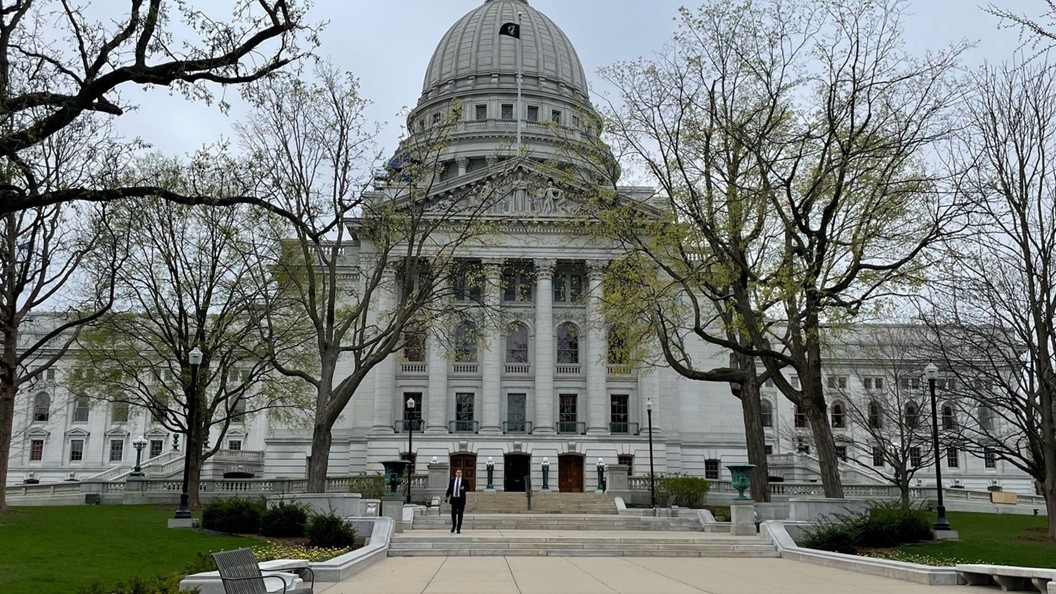
Lawmakers in Wisconsin have taken another step toward implementing mandatory age verification for adult websites. On Wednesday, the state Senate moved the proposal forward but not before removing a controversial section that would have required platforms to block users accessing content through virtual private networks (VPNs).
A frequent critique of state-level age verification (AV) laws is that they apply only within specific borders, making them relatively easy to bypass. Users can simply rely on VPN services to mask their location and avoid state-based verification systems. As public discussion around VPN use has grown, some legislators have attempted to close that perceived loophole.
Earlier drafts of Assembly Bill 105 included language that would have forced adult website operators to restrict traffic coming from IP addresses associated with VPN providers. The proposal sought to prevent individuals from accessing platforms through networks known to conceal a user’s true geographic location. However, one of the bill’s co-authors later introduced an amendment to eliminate that requirement.
The Senate approved the amended version this week, effectively removing the anti-VPN clause from the legislation. Shortly afterward, the Assembly signed off on the Senate’s revisions. With that step completed, the measure now focused solely on age verification without VPN blocking provisions is expected to be sent to the governor for consideration.
During debate on Wednesday, lawmakers did not specifically address the removal of the VPN language. Nevertheless, two senators, representing different political parties, expressed opposition to the broader bill. Their concerns centered on potential privacy risks, the intrusive nature of mandatory identity checks, and questions about how user data would be stored and protected.
Whether other states will attempt to tighten similar laws by directly targeting VPN use remains uncertain.
In West Virginia, for example, Senate Bill 498 contains explicit language prohibiting users from circumventing age verification through VPNs, proxy services, or other anonymizing tools. That proposal is currently awaiting its first committee review.
Meanwhile, in Indiana, state officials have filed a lawsuit against Aylo, claiming the company failed to adequately enforce the state’s age verification requirements. Although Indiana’s statute does not specifically reference VPN usage, the complaint argues that residents including minors can still access the company’s websites by using VPN-based IP addresses, proxy servers, or location-spoofing technology.
Should West Virginia’s measure pass, or if Indiana prevails in court, other jurisdictions may feel encouraged to adopt stricter legislative language or pursue similar legal action aimed at limiting technical workarounds to age verification systems.
As the national conversation around online age checks continues, the balance between regulatory enforcement, user privacy, and technological realities remains a central point of debate.