
Let’s get one thing out of the way early: humans really like to think we’re special.
Big brains. Upright walking. Wi-Fi.
But when it comes to anatomy especially that anatomy nature has been quietly outclassing us for millions of years without making a big deal about it.
This article isn’t here to shock anyone or drift into fantasy territory. It’s about real biological facts, supported by zoology and evolutionary research, written in a relaxed, readable way. There’s a bit of humor, because the topic almost demands it, but everything here is rooted in reality.
Today we’re talking about penis size relative to body size in the animal kingdom and why, compared to some creatures out there, the human species is… honestly… painfully average.
First, a Quick Reality Check
When scientists talk about “size,” they almost never mean absolute size alone. By that logic, the elephant wins everything and the conversation ends.
What actually matters is relative size how large an organ is compared to the animal’s body length or mass. This is where things get interesting. Evolution doesn’t care about confidence or cultural obsession. It cares about reproductive success, competition, and efficiency.
And in some species, that produces proportions that sound fictional until you see the data.
Below is a Top 10 list of animals with the largest reproductive organs relative to body size, based on documented scientific observations, not internet myths.
1. The Barnacle (Yes, Really)
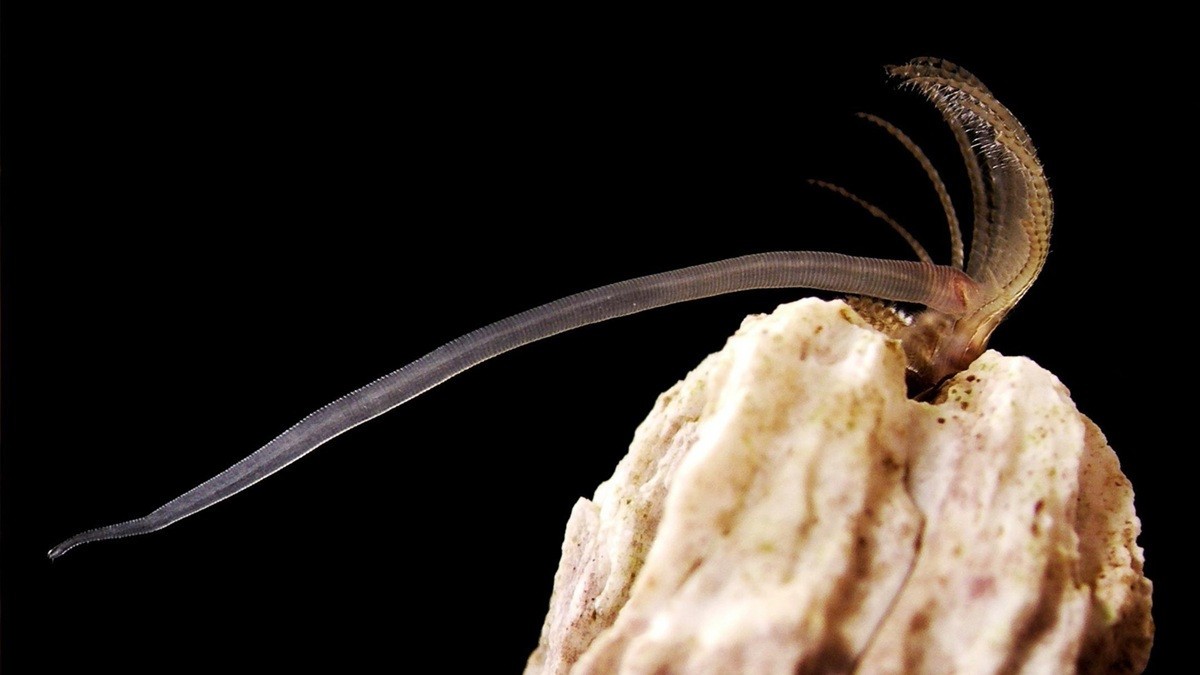
Barnacles are small marine crustaceans, usually just 2–3 cm long as adults. They spend their lives permanently attached to rocks, docks, or ship hulls. No movement, no chasing partners. Evolution responded in the most direct way possible.
A barnacle’s reproductive organ can reach 20–25 cm in length up to eight times its body size. That’s the largest relative size ever recorded in the animal kingdom. Scaled to human proportions, this would equal well over 12 meters. At that point, humans aren’t even competing in the same category.
2. Argentine Blue-Billed Duck
This duck looks harmless. Biology says otherwise. The male’s body length is around 40 cm, and its reproductive organ, when fully extended, measures 35–42 cm. It’s flexible, spiral-shaped, and stored internally when not in use.
This extreme proportion is the result of intense sexual selection. Female ducks evolved complex reproductive tracts, and males followed with equally complex anatomy. It’s not romantic, but from an evolutionary perspective, it’s incredibly effective.
3. The Echidna
Echidnas already look like a biological experiment that somehow worked. Adult males measure about 45 cm in body length, with reproductive anatomy measuring roughly 18–20 cm.
What makes echidnas truly unique is structure: four separate tips, with two active at a time. This evolved due to heavy competition among males. From nature’s point of view, redundancy equals success.
Humans have one. Echidnas have four. That’s the comparison.
4. Bed Bugs
A bed bug’s body length is only 4–5 millimeters, yet its reproductive organ measures approximately 2–2.5 millimeters. That’s nearly half its body length.
Scaled to humans, this would translate to roughly 30–35 cm. The mechanism involved, known as traumatic insemination, isn’t pleasant, but evolution doesn’t prioritize comfort. It prioritizes results.
5. Seed Beetles
Seed beetles are tiny insects, usually 3–5 mm long. Their reproductive organs can reach 2–3 mm, making them enormous relative to body size.
These beetles are frequently studied because they clearly demonstrate how sexual competition alone can reshape anatomy over relatively short evolutionary periods. No gym, no supplements just pressure and adaptation.
6. The Octopus
Octopuses don’t use a traditional reproductive organ at all. Instead, males rely on a specialized arm called a hectocotylus. Depending on the species, this arm can measure 60–100 cm, often approaching or exceeding the animal’s mantle length.
In some species, the arm detaches entirely during mating. It’s strange, effective, and perfectly aligned with the octopus’s already unconventional biology.
7. Dolphins
Among mammals, dolphins are clear outliers. A bottlenose dolphin typically measures 250–380 cm in body length, while its reproductive organ reaches around 30–35 cm.
Relative to body size, that’s impressive, especially when combined with unusually large testes. Marine biologists link this to intense mating competition within complex social structures. Intelligence and anatomy evolved side by side.
8. The Wild Boar
Wild boars average 150–180 cm in body length and possess a corkscrew-shaped reproductive organ measuring 40–50 cm.
This unusual design isn’t random. It evolved specifically to match the female reproductive tract, making it one of the clearest examples of lock-and-key evolution in mammals. Romance didn’t factor into the design brief.
9. The Raccoon
Raccoons measure about 60–70 cm in body length, with reproductive anatomy averaging 9–11 cm. They also have a baculum, a bone that allows for prolonged mating.
Relative to body size, raccoons slightly outperform humans. Not something most people expect from an animal best known for raiding trash cans.
10. Humans (Let’s Be Honest)
The average human male stands around 170–180 cm tall, with an average erect length of approximately 12–16 cm.
Relative to body size, this places humans squarely in the middle of the mammalian range. Larger than gorillas, smaller than many primates, and completely overshadowed by multiple birds, insects, and marine species.
Average is the correct word here biologically speaking.
Why Humans Are… Modest by Nature
Humans didn’t evolve extreme anatomy because extreme anatomy wasn’t necessary. Instead, we evolved pair bonding, social cooperation, long-term relationships, and emotional and cognitive attraction.
In species where mating is chaotic and hyper-competitive, anatomy escalates. In species where cooperation and communication matter, proportions stabilize.
Biology reflects lifestyle, not insecurity.
The animal kingdom is strange, creative, and relentlessly efficient. If there’s one takeaway from all of this, it’s simple: no matter how impressive we think we are, nature has already built something bigger, stranger, or smarter somewhere else.
And honestly, that’s what makes it worth paying attention to.