
A World Apart from Our Own
Imagine a world where the boundaries between humans and animals were fluid, where livestock shared not just your barn but sometimes your bed, and where the act of bestiality unthinkable to modern sensibilities was once treated with surprising leniency. This is the uncomfortable reality of the early Middle Ages, a time when human-animal sexual relations were viewed through a lens so different from our own that it challenges everything we think we know about morality, sexuality, and the very definition of what it means to be human.
The medieval period, spanning roughly from the 5th to the 15th century, represents a fascinating crucible of changing attitudes toward zoophilia. What began as a relatively minor transgression in the eyes of the early Church evolved over centuries into one of the most heinous crimes imaginable a transformation that reveals deep anxieties about human identity, the boundaries of nature, and the power of religious and legal institutions to shape human behavior .
Today, in our modern world, the very concept of bestiality provokes instinctive revulsion. We view it as an aberration, a crime against nature and against animals themselves. Yet this moral certainty is a relatively recent development in human history. The medieval journey from tolerance to horror offers a mirror to our own assumptions and raises profound questions: Why do we find bestiality so abhorrent today? What changed in the medieval mind that transformed a minor sin into a capital offense? And what does this history reveal about the construction of human identity itself?
The Surprising Leniency of the Early Middle Ages
The Early Penitentials: A Minor Sin
To modern readers, the most shocking revelation about medieval attitudes toward bestiality is how casually it was treated in the earliest Christian penitentials those manuals used by priests to assign appropriate penances for sins. In the 6th and 7th centuries, Irish and British penitential collections treated bestiality as a relatively minor offense, frequently grouping it with masturbation rather than with more serious sexual transgressions .
This leniency seems almost incomprehensible from our contemporary perspective. How could an act we consider morally monstrous have been treated with such apparent indifference? The answer lies in the theological framework of early medieval Christianity, which viewed sexuality primarily through the lens of intention and spiritual pollution rather than through the modern categories of consent and animal welfare that dominate our thinking today.
The early penitentials reflect a world where the boundaries between human and animal were less rigidly defined. In a predominantly agricultural society where humans and animals lived in intimate proximity sharing homes, labor, and often sleeping quarters the occasional cross-species sexual encounter, while frowned upon, was not yet viewed as the existential threat to human identity it would later become .
The Eastern Influence: Theodore of Tarsus and the Great Shift
A Byzantine Archbishop Changes Everything
The pivotal moment in the transformation of Western attitudes toward bestiality came not from Rome or the Germanic tribes of Europe, but from the Eastern Mediterranean. In 669 AD, a Greek-speaking Byzantine monk named Theodore of Tarsus arrived in England to serve as Archbishop of Canterbury .
Theodore brought with him the theological traditions of the Eastern Church, particularly the teachings of St. Basil the Great and the canons of the 314 Council of Ancyra. These Eastern sources treated bestiality with far greater severity than the Western penitential tradition, grouping it with male-male sexual acts as offenses against the natural order .
The Paenitentiale Theodori, a collection of Theodore's judgments compiled after his death, represents a watershed moment in Western attitudes toward bestiality. For the first time in Anglo-Saxon and Western European literature, bestiality was explicitly compared to male homosexuality and assigned similarly severe penances:
"He who often commits fornication with a man or with a beast should do penance for ten years. Another judgment is that he who is joined to beasts shall do penance for fifteen years."
This comparison would prove revolutionary. By associating bestiality with the gender violation of male-male sexual acts, Theodore elevated bestiality from a minor sin to one of the most serious offenses imaginable . The theological innovation spread rapidly throughout Western Europe, appearing in penitentials, canon law codes, and eventually secular law throughout the continent.
The Rise of "Sins Against Nature"
Aquinas and the Theological Framework
By the 13th century, bestiality had become firmly established as one of the most grievous of all sins. The Dominican theologian Thomas Aquinas (1225-1274) provided the definitive theological framework for this transformation, classifying bestiality (bestialitas) as the gravest form of "unnatural vice" (vitium contra naturam) .
Aquinas distinguished bestiality from other forms of sexual sin by defining it as intercourse "with a thing of another species" (si fiat per concubitum ad rem non ejusdem speciel) . For Aquinas and his scholastic followers, the sin of bestiality lay not primarily in the violation of another being's consent a concept that would have made little sense in the medieval context of human-animal relations but in the fundamental transgression of the boundaries established by divine natural law.
The medieval understanding of "nature" was deeply intertwined with divine purpose. Sexual acts, in this framework, were intended by God for procreation within marriage. Any sexual act that could not result in conception including bestiality, homosexuality, and masturbation—was considered a violation of natural law . Among these violations, bestiality was considered the most serious because it represented the most extreme departure from the natural order: the union of humans with creatures of a completely different species.
The Cultural Anxiety Behind Condemnation
Defining Humanity Through Animality
Why did medieval society become increasingly obsessed with bestiality, progressing from leniency in the 7th century to execution by the 15th? The answer lies in a profound cultural anxiety about the boundaries between humans and animals an anxiety that resonates surprisingly strongly with contemporary concerns about posthumanism and the ethics of human-animal relations.
Scholar Joyce Salisbury argues that the medieval condemnation of bestiality stemmed from a fundamental fear of blurring the ontological boundaries that separate humans from other animals . In a world where animals worked alongside humans, shared their homes, and sometimes even faced trial alongside their human companions in court, the question of what made humans special was constantly in play.
The medieval period saw the construction of human exceptionalism the idea that humans are fundamentally different from and superior to other animals as a central pillar of Christian thought. Bestiality threatened this carefully constructed hierarchy. If humans could mate with animals, what separated the human from the beast? What prevented the birth of monstrous hybrids that would challenge the entire taxonomy of creation?
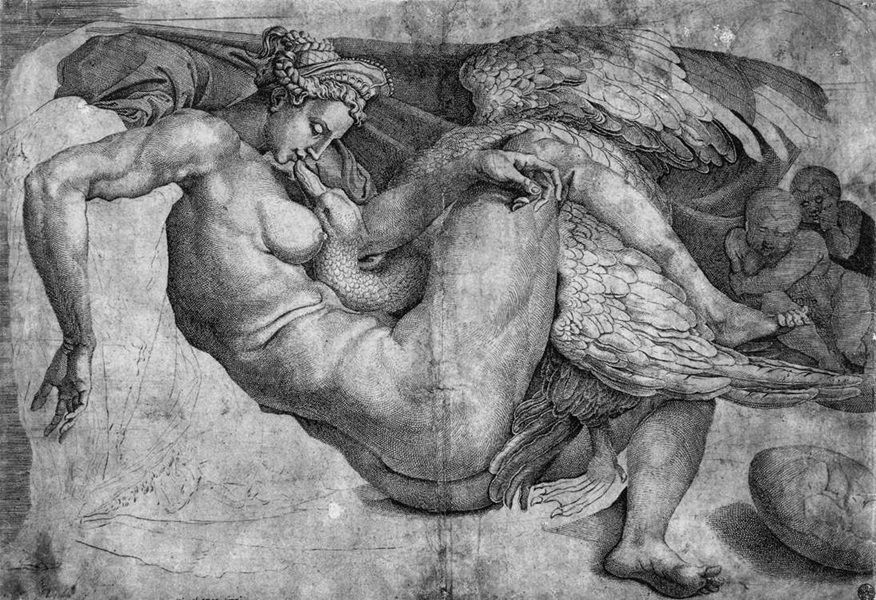
These fears manifested in vivid cultural expressions. The Greek myth of Pasiphaë the queen who lusted after a bull and gave birth to the Minotaur was frequently retold and elaborated in medieval literature, serving as a cautionary tale about the dangers of transgressing species boundaries . The Ovide moralisé and William Caxton's translation of Ovid's Metamorphoses spread this myth throughout medieval Europe, reinforcing the cultural horror of bestial unions .
The Legal Transformation
From Penance to Execution
The theological transformation of bestiality into the gravest of sins was accompanied by a dramatic shift in legal punishment. By the late Middle Ages, bestiality had become a capital offense throughout much of Europe, with convicted individuals and the animals they had allegedly violated being executed together .
English law provides a striking example of this transformation. While early medieval English law had no specific statute against bestiality, by the 13th century legal commentators were proposing extreme punishments. Fleta, a legal treatise from around 1290, declared that "those who commit bestiality and sodomists are to be buried alive" . Britton, another legal treatise from the same period, recommended burning as the appropriate punishment .
The first English statute explicitly criminalizing bestiality came only in 1533, during the reign of Henry VIII . The Buggery Act made the "detestable and abominable Vice of Buggery committed with mankind or beast" a felony punishable by death . While this law was initially temporary, it was eventually made permanent and remained on the books until 1861, when the death penalty was replaced with life imprisonment.
This legal transformation reflected a broader pattern across Europe. In Sweden, between 600 and 700 people were executed for bestiality in the 17th and 18th centuries . In 1539, Guillaume Garnier was strangled and burned for intercourse with a female dog . In 1601, sixteen-year-old Claudine de Culam was hanged and burned along with the dog she had allegedly copulated with .
The Gap Between Law and Practice
A Case Study in Rural England
Despite the severity of legal penalties, the actual enforcement of laws against bestiality was far more complicated than the legal codes suggest. A fascinating microhistorical study of a 1520 trial in Chichester, England, reveals the gap between legal theory and social practice and the personal animosities that often drove accusations .
The case of Thomas Frogbrook, a farmer accused of having "committed misdeeds against nature with a cow," illuminates the social dynamics underlying bestiality accusations in the late medieval period . The trial was initiated not by church authorities, but by a personal enemy of Frogbrook named Emery Pynfold, who had recently lost a defamation suit against the same man . Pynfold was no moral crusader but an opportunist using the legal system for personal revenge.
The witness testimony in Frogbrook's case is equally revealing. Edward Lynfield, the primary witness, claimed to have seen Frogbrook in the act while riding past a field. However, his account came with significant social baggage. The men involved were all of middling status in their rural community farmers with enough property to be taxed but not part of the elite. They knew each other from childhood and lived in close proximity in a rural economy where human-animal contact was constant .
Ultimately, Frogbrook was acquitted by a process known as "purgation," in which three men of good standing swore to his character. The court declared him innocent, and he immediately sued Pynfold for malicious prosecution . This outcome suggests that despite the severity of theological and legal condemnation, local communities and even church courts sometimes resisted imposing the harshest penalties.
Understanding the Past, Questioning the Present
What Medieval Attitudes Reveal About Modern Morality
The medieval transformation of attitudes toward bestiality offers a powerful lesson in the social construction of morality. What was once considered a minor sin, comparable to masturbation, became over the centuries one of the most heinous crimes imaginable. This change was not driven by new discoveries about animal suffering or consent concepts that would have been alien to medieval thinkers but by shifting theological frameworks, cultural anxieties about human identity, and the increasing power of ecclesiastical and secular institutions to regulate human behavior .
Today, our horror at bestiality is so instinctive that we assume it must be universal. Yet the historical record shows that human attitudes toward interspecies sexuality have been remarkably diverse across time and place. The medieval journey from tolerance to terror reveals that our modern revulsion is not a timeless truth but the product of specific historical developments.
However, medieval history is not merely a curiosity from the past. Contemporary debates about human-animal relations, from the ethics of animal agriculture to the possibilities of genetic engineering, raise questions similar to those that preoccupied medieval thinkers. When we draw boundaries between humans and animals, we are engaging in a cultural practice with deep historical roots.
The medieval anxiety about bestiality was ultimately an anxiety about what it means to be human. In a world where the boundaries between species seem increasingly fluid, we continue to ask the same questions: What separates us from animals? What does it mean to be human? And what happens when we transgress the boundaries we have created?