
When we speak of the world’s "oldest profession," we are usually repeating a clever phrase coined by Rudyard Kipling in his 1888 short story, "On the City Wall," where he refers to a character as a member of "the most ancient profession in the world" . However, for a modern escort directory and a high-value article, we need to move beyond literary witticisms and investigate a deeper, more historically resonant question: Who was the very first person to trade intimacy for a living?
While Kipling gave us the popular phrase, the historical reality is far more complex and fascinating. The oldest verifiable evidence of sex work doesn't point to one single "Eve" but rather to the ancient civilizations of Mesopotamia and Greece, where the practice was not just a shadowy vice but a structured, and often taxed, institution.
The Myth of the Sacred Prostitute: A Historical Misunderstanding
For decades, scholars and enthusiasts pointed to the "Sacred Prostitutes" of ancient temples as the definitive answer to our question. The narrative, popularized by works like Herodotus' Histories, suggested that women in ancient Babylon were obliged to have sex with strangers in the temple of Mylitta as a religious duty.
However, recent scholarship has seriously challenged this notion. Modern academic analysis suggests that a misunderstanding of ancient Sumerian and Akkadian terms has led to a myth of its own. According to historians, cuneiform tablets found in Mesopotamia which list professions were long interpreted as referring to "prostitutes." Today, scholars argue these references likely described women without male guardians, often working in taverns, who were condemned by later religious leaders . As one expert notes, "evidence for Mesopotamian prostitution adduced by 'patriarchally' oriented scholars actually refers to the sexual activity of 'single women / women without a husband'".
This doesn't mean sex work didn't exist, but rather that our earliest written evidence is more ambiguous than we'd like. The legend of the "sacred prostitute" may be a classic case of historical fiction written by the victors.
The Hetairai of Ancient Greece: The First Documented Escorts
If we want a name, a face, and verifiable evidence, we must look to Classical Greece. Here, we find not a single individual, but an entire class of women who were arguably the first true "escorts" in history: the Hetairai.
The term 'hetaira' translates to "female companion," and these women were a far cry from the common street prostitutes (pornai) of the era. Hetairai were educated, refined, and independent professionals who provided intellectual companionship, entertainment, and intimacy for the elite of Greek society. They paid taxes, lived in relative luxury, and were respected (or at least tolerated) as members of society . For example, Phryne, a famous 4th-century BC hetaira, was so celebrated that she served as the model for the statue of Aphrodite at Knidos.
The Grave of the 'Jerusalem Courtesan'
Perhaps the most compelling and verifiable evidence of an "ancient escort" comes from a recent archaeological discovery. In 2023, the Israel Antiquities Authority announced the discovery of a 2,300-year-old burial cave near Kibbutz Ramat Rachel in Jerusalem.
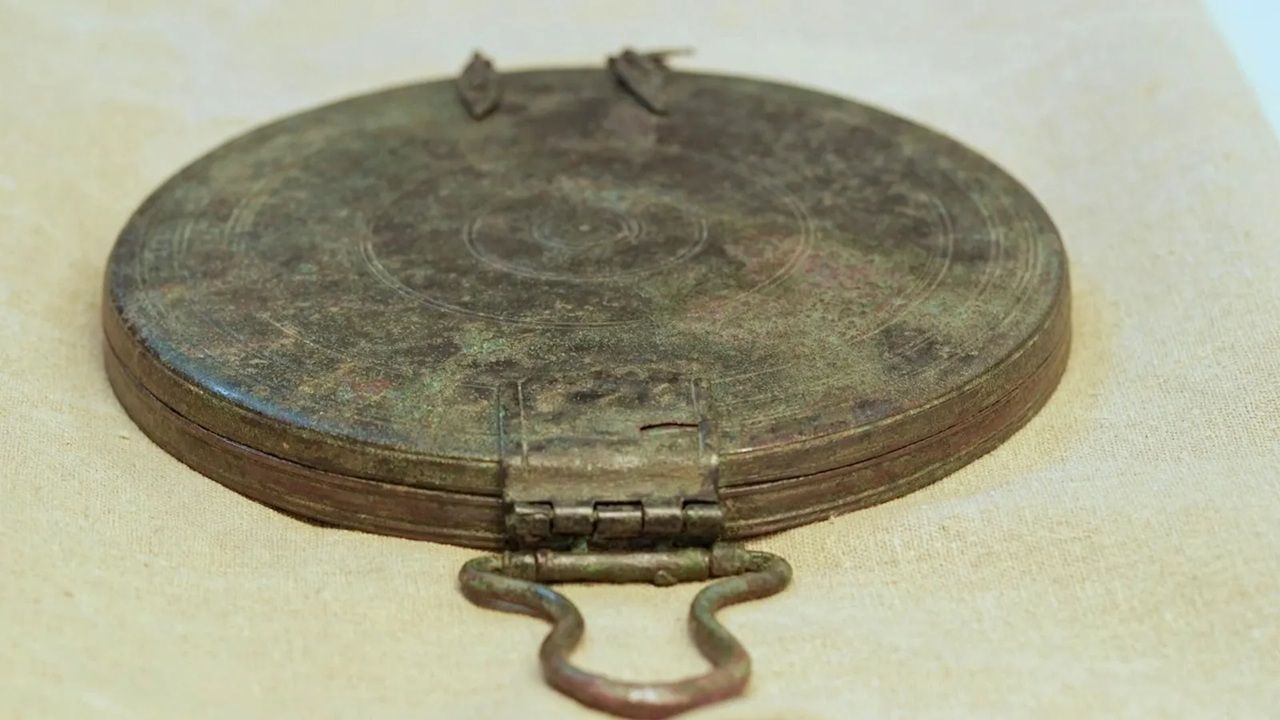
Inside, archaeologists found a beautifully preserved bronze folding mirror a luxury item so expensive that it would have been given only as a wedding gift or as a token of affection from a wealthy client to his hetaira.
The tomb's location, far from any settlement and next to a highway, led the researchers to a striking conclusion: this was not the grave of a local wife. It was the final resting place of a Greek hetaira who had accompanied a high-ranking military officer or government official on his travels . She died on the road, and in accordance with the customs of the time, she was buried beside it.
This gives us the first verifiable "case file" of a named profession a woman who made her living as a paid companion and escort in the Hellenistic period. She is not a mythical figure from a temple but a real woman whose remains and personal belongings tell a story of travel, luxury, and companionship in the service of powerful men.
The Economics of Antiquity: Taxing the Trade
Whether we look at the ambiguous temple texts of Mesopotamia or the clear documentation of the Greek hetairai, one fact remains constant: sex work was a significant economic activity. One of the strongest arguments for prostitution being an established profession from the very dawn of recorded history is the fact that it was taxed.
In the ancient Middle East, prostitutes were expected to retain tax receipts, proving that the state not only recognized the profession but profited from it . The documentary evidence from Graeco-Roman Egypt, though scattered, also confirms the existence of a complex "organization" of the prostitution business and the systematic taxation of its earnings.
The First Professionals
So, who is the oldest verifiable prostitute? We cannot point to a single name like an ancient Eve. The mists of prehistory and the biases of ancient scribes obscure that individual. However, we can point to the Hetairai of Ancient Greece as the first clearly documented, verifiable professionals in the field. And thanks to modern archaeology, we can look into the eyes of a 2,300-year-old "Jerusalem Courtesan" whose mirror, discovered just last year, proves the long and storied history of the professional escort.
These women were more than just sellers of sex; they were entrepreneurs, artists, and companions. Their existence, recognized and taxed by the state, proves that the impulse for intimate companionship is, as Kipling correctly guessed, one of the most ancient human drives, with a history we are only just beginning to truly understand.