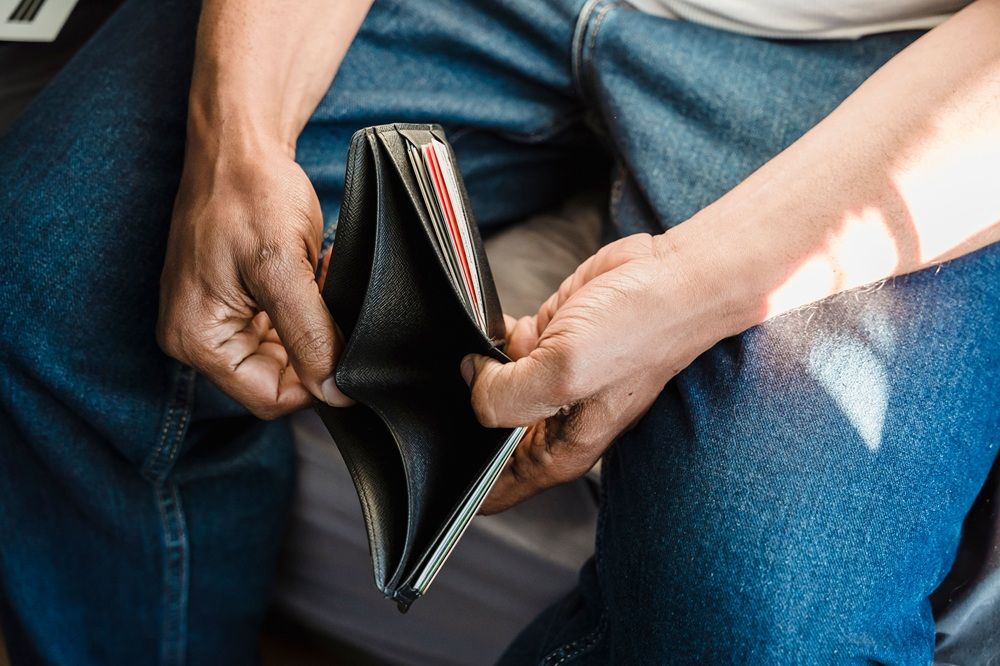
Let’s be brutally honest about this. There is a moment in every escort’s career that defines how they will run their business forever. That moment is when the door clicks shut, the clothes are off, or the hour is up, and the client suddenly decides he "doesn't have the full amount," forgot his wallet, or "will transfer it later."
It’s a sinking feeling. It’s a violation of trust. It’s a massive hit to your income. But more than that, it’s a power play a deliberate attempt to undermine the very foundation of your professional boundaries.
This guide isn’t just about how to ask for money. This is about building a financial fortress around your business so that the possibility of non-payment becomes almost statistically non-existent. We are going to dive deep into the psychology of the non-paying client, the advanced tactics for securing your bag, and the one golden rule that must never, ever be broken.
The Psychology of the "Non-Payer"
Before we discuss tactics, we need to understand who you are dealing with. Non-payers don't just wake up and decide to steal services. They are usually one of three specific archetypes. Recognizing these profiles in your initial communication is 80% of the defense.
The Power Player: This is often a man who feels emasculated or powerless in his daily life. He gets a thrill from "getting over" on someone. By withholding payment, he regains a sense of control that he feels he lost by being vulnerable enough to book an appointment. He will often be overly aggressive or overly complimentary during the booking process to mask his intent.
The Opportunist: This guy didn't plan to not pay, but he’s a "soft" criminal. He realizes mid-booking that the escort is non-confrontational or doesn't have a clear system. He sees the lack of a clear "checkout" process and decides to take a chance. He is banking on your discomfort or fear to let him slide.
The Genuinely Broke (Irresponsible): This is the saddest archetype. He booked impulsively, spent money on a hotel or drinks, and truly doesn't have the full fee. Instead of being honest, he panics and resorts to lies.
Your Strategy: All three require a different approach, but the solution is always the same: Unshakeable Protocol. A clear, consistent, and unemotional system acts as a force field. The Power Player doesn't try it because he senses you won't be bullied. The Opportunist doesn't see an opening. The Broke guy knows he can't fake his way in.
The Security Deposit Your "Screening" Superpower
You might see a deposit as just "part of the payment," but that is a narrow view. Think of the deposit as the most powerful psychological screening tool you possess.
Why it scares away the time-wasters and scammers:
-
Financial Commitment: Genuine clients understand that your time is valuable and must be secured with a commitment.
-
Identity Verification: When a client sends money via bank transfer or a verified platform, they leave a digital footprint. Scammers and non-payers hate this.
-
Skin in the Game: A client who has paid a deposit is already invested. He is much less likely to cause drama because he wants to enjoy the session he has already "bought into."
How to Handle the Deposit Conversation Like a Boss:
Don't apologize for asking for one. Frame it as a standard business practice.
"Hi [Name], thank you for reaching out. To secure the appointment, I just need a 20% deposit via [Platform] to confirm the time slot. I’ll send you the details as soon as you confirm the address."
If a client pushes back with "I got scammed before" or "I don't do deposits," you have two options:
-
Option A (Boundary): "I completely understand your hesitation, but my security is non-negotiable. I'm afraid I can't hold the time without one."
-
Option B (The Redirect): "If you're uncomfortable with a deposit, we can do a shorter booking, but the full fee will still be required upon arrival." (This rarely works, but it shows you are flexible, not weak).
Advanced Tip: Have a "Deposit Agreement" ready. This is not a legal contract, but a text message that outlines: "Deposit of X received. Booking confirms for [Date/Time] for [Hours]. Remaining balance of Y due in cash upon arrival." If the client refuses to acknowledge this text, do not proceed.
The Arrival Dance Payment First, Always
This is the most awkward part of the booking for many, but it is the most critical. The moment you open the door, the tone is set. The "arrival dance" needs to be smooth, natural, but absolutely firm.
A Script that Works:
-
The Warm Welcome: Greet them warmly. A hug, a smile. Offer to take their coat. But do not let them wander into the bedroom.
-
The Cool Down: Offer them a glass of water or a seat in the living room/kitchen area. This physically separates the "greeting space" from the "intimate space."
-
The Business Pivot: Sit down opposite them, or lean casually against the counter, and say: "Okay, let's get the boring part out of the way so we can focus on the fun stuff! The remaining balance is [Amount]." - Do not say "whenever you're ready." Say it as a statement of fact.
The Fine Art of Counting Cash
Clients often get uncomfortable when you count money in front of them. Here is how to handle it professionally:
-
The Discreet Count: Always ask for the envelope. "Do you mind putting it in the envelope for me?" Take the envelope, place it on a table, and count it while maintaining eye contact and having a light conversation.
-
The "Stack" Technique: If it's a large amount, fan the notes out quickly on the table to count and check for counterfeits. If you see fake bills, you have a huge problem.
-
The "Change" Trap: Never, ever be prepared to give change. State clearly: "My fee is [Amount] exact, please." If they bring an extra large bill, you risk losing money or the client trying to get you to run to a store mid-booking. It's a distraction technique.
"I'll Transfer It Now" The Digital Trap
In an increasingly cashless world, clients often want to use bank transfers (like Revolut, Wise, or local bank apps) for the balance. This is a high-risk maneuver that many escorts fall for.
The Problem: They can claim fraud later, cancel the transaction, or, in some countries, the bank freezes the funds for verification. You are then left chasing a receipt that has no actual money attached to it.
The Protocol:
-
Cash is King: Always prefer cash. State it on your profile.
-
The "Wait and See" Rule: If they insist on a transfer, you must apply the "Wait and See" rule. Do not start the session until the money is physically in your account. Not "I sent it." Not "It will take 2 hours to clear." It must be cleared. Sit and chat, have a glass of wine, but the clock on your paid time does not start until the money is in your hand or your bank account.
-
The "Screenshot" Lie: Do not accept a screenshot of a transaction as proof. These are easily faked. Log into your own app on your own phone and check the balance.
The "Aftermath" When the Client Refuses Post-Booking
Let’s say you have made a mistake (it happens). You let the session start, or you were distracted, and now the session is over and the client is getting dressed and is making excuses about the money. Do not panic.
Step 1: The De-escalation (The "Soft" Ask)
Get out of the bedroom. Move to the living area. Hand him his jacket. As you walk him to the door, say calmly: "Oh, I think you forgot the remaining balance on the table. I just want to make sure it's taken care of before you go so we don't have to worry about it later."
This forces him to actively refuse in a specific location, rather than "forgetting" as he runs out the door.
Step 2: The Reality Check (The "Hard" Ask)
If he refuses, get stern, but keep your voice low and controlled. "Listen, I've made a huge mistake by trusting you. We had an agreement. I need my fee. It's why I'm here." Note: Do not beg. Do not cry. Do not accuse him of being a criminal. Just state the facts.
-
If he offers half: "I'm sorry, that's not the agreement. I can't accept that. I need the full amount."
Step 3: The Hard Stop
If he is not budging, you need to make a split-second decision. Is the amount of money worth the safety risk? Usually, the answer is no. Accept the loss. Open the door and say:
"I'm going to have to ask you to leave now. I'm disappointed we couldn't sort this out like adults. Please don't contact me again."
The Apex Rule What You Should NEVER, EVER Do
We need to talk about the nuclear button. In the heat of the moment, when you are angry and feeling ripped off, your brain might scream: "I'll call his wife!" or "I'll report him to his boss!"
Do not do this.
Here is why this is the most dangerous move you can make:
-
It's a Crime: In nearly every jurisdiction, threatening to expose someone's sexual activity in exchange for payment (or to coerce payment) is considered blackmail or extortion. If you do this, you become the criminal.
-
It Gives Him Power: If you threaten him, you have just handed him a reason to go to the police. He can now claim you were running an illegal operation AND trying to extort him. He has the "law" on his side.
-
It Ruins Your Reputation: The escorting community is small. Word gets around that you are "hot-headed" or "unstable." You will lose more money in referrals than you ever gained from that one booking.
The Alternative:
The only "weapon" you have is your silence. Walk away. Block him. Learn the lesson. The universe has a way of dealing with these kinds of people, and it is not your job to be the avenger. Your job is to be safe and make money.
Preventing "Time Wasters" and "Fantasy Bookers"
Non-payment starts before the booking. It starts with the guy who just wants to chat for free. How do you spot him?
The "Endless Question" Guy: "What does your hair look like? Do you have heels? What color are they? Do you kiss? Do you like this? Do you like that?"
Your Defense: The "Consultation Fee."
If the messages go beyond a quick greeting and screening questions, drop this line:
"It sounds like you have a lot of questions! I'd be happy to discuss this in detail during a 10-minute paid consultation call. It's [Price] via [App]. Otherwise, we can continue this conversation when you're ready to confirm a booking with a deposit."
The "I'll Confirm Later" Guy: He says he’s booking for tomorrow, but tomorrow never comes.
Your Defense: The "Expiring Hold."
"I'm happy to hold this time for you until [Time] tonight. If I haven't received the deposit by then, the slot opens up. Let me know if you need more time!"
The "Blacklist" Network
If a client doesn't pay you, you have a responsibility to the community to warn others anonymously. Never post their full name or photo publicly (this could be considered defamation or doxxing).
The Professional Approach:
-
Share details privately with trusted colleagues.
-
Use secure and anonymous industry-specific blacklist tools where you can report their number and behavior (non-payer, aggressive, etc.) without revealing who you are.
The Mirror Test Are You Making These Mistakes?
Sometimes, you have to look in the mirror. Non-payment often occurs when the client senses a lack of confidence.
The "Nervous" Mistake: You fumble when asking for the money. You look away. You apologize.
Fix: Practice the script in the mirror. Say it out loud five times before every shift: "The remaining balance is..." Say it with a smile, but with dead eyes. Neutral is powerful.
The "Eager" Mistake: You start taking off your clothes before the money is sorted.
Fix: Do not undress a single piece of clothing until the money is counted and put away. The visual of the fee "going into the drawer" or "the bag" is the signal that the business portion is over.
The "Drugged" or "Drunk" Mistake: If you are under the influence, your judgment is impaired. You will lose track of time and money.
Fix: Stay sober. The professional who has their wits about them collects their fee every time.
The Positive Mindset
Finally, don't let a non-payer destroy your trust in humanity. Most clients are decent. They are nervous, respectful, and understand the transaction.
Your Mantra: "I offer a premium service, and I am worth a premium fee."
When you internalize that, you stop acting like a beggar and start acting like the CEO of your own time. That energy is palpable. It makes the non-payers nervous and the good clients relieved, because they know they are in professional hands.
Protecting yourself from non-payment is not about being cold or aggressive. It is about being prepared. It's about having protocols that are as standard as brushing your teeth. Deposit first. Payment upon arrival. Cash preferred. No service until funds are secure. De-escalation over aggression. Community over silence.
By following these detailed steps, you are not just protecting your bank account; you are protecting your emotional well-being. You are ensuring that every appointment ends on a high note, with you feeling empowered, respected, and paid.