Ukraine is considering an unlikely source of additional wartime revenue: bringing its large online adult-content economy into the legal and taxable economy.
The proposal has attracted international attention because it connects two subjects that rarely appear in the same policy discussion adult digital entertainment and military financing. But behind the sensational headlines is a much broader question about taxation, criminal law, online platforms and the extraordinary financial pressure created by a prolonged war.
For Ukraine, the issue is not simply whether adult content should be legal. It is also about whether people earning substantial income from online platforms should be treated as criminals, taxpayers, or both at the same time.
The debate has become particularly significant as Kyiv searches for additional domestic revenue while continuing to spend heavily on defence, military equipment and drone production.
Why Ukraine Is Considering a Change
Pornography remains restricted under Ukrainian law, creating an unusual situation for people who earn money by producing adult material online.
The country's digital creator economy has expanded rapidly, including through international subscription platforms. Yet the legal framework has not developed at the same pace.
That has produced a difficult contradiction. A creator can potentially report income and pay taxes on money earned through an online platform while simultaneously risking criminal scrutiny because of the nature of the material generating that income.
Supporters of reform argue that this approach makes little practical sense.
Instead of forcing an increasingly international online industry to operate in a legal grey zone, lawmakers are considering whether adult content could be regulated and taxed under a clearer framework.
The argument is partly economic, but it is also about how police, courts and tax authorities should spend their limited resources during wartime.
The Proposal Could Put Millions Into the State Budget
One of the most prominent supporters of legalisation is Ukrainian parliamentarian Yaroslav Zhelezniak, who has argued that bringing the sector into the formal economy could produce meaningful tax income.
His estimate puts the potential annual revenue at around $25 million.
On a national budget scale, that is not enough to transform Ukraine's finances. During a major war, however, additional revenue can still have practical value particularly when it comes from an economic activity that already exists rather than from introducing an entirely new industry.
The drone connection is what makes the proposal particularly striking.
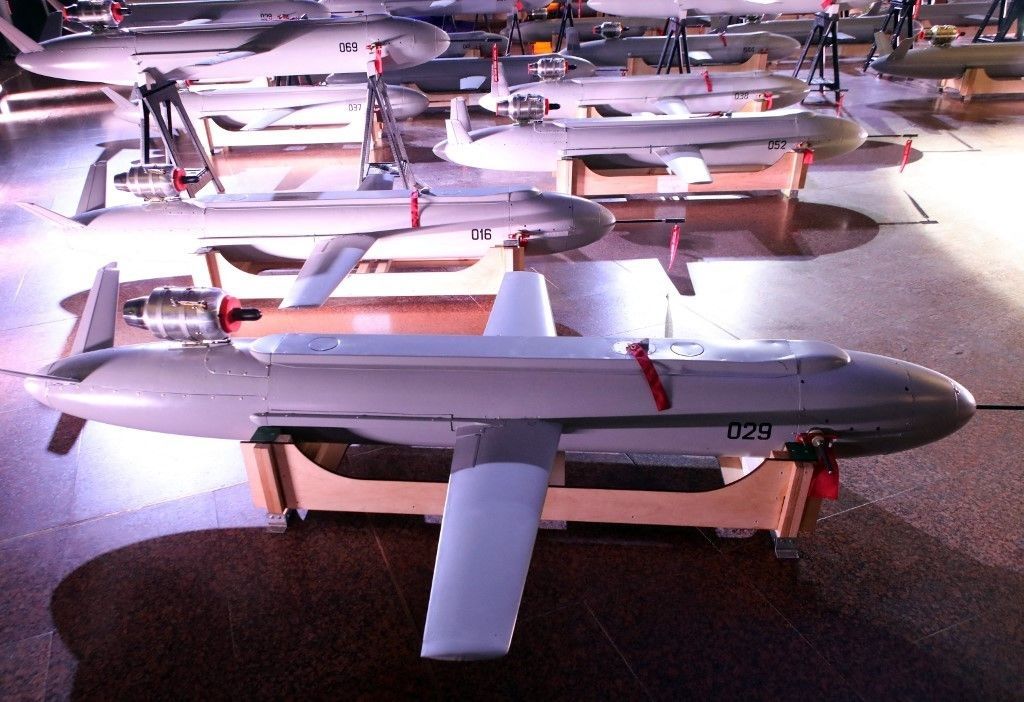
Zhelezniak has suggested that the potential tax revenue could help finance the purchase of as many as 30,000 drones.
That does not mean adult-content creators would directly fund individual military units or that every tax dollar could be traced to a specific aircraft. Rather, the comparison illustrates the potential purchasing power of relatively modest additional state revenue when directed toward inexpensive but strategically important military technology.
Ukraine’s Creator Economy Is Already Bigger Than Many People Realise
The debate is not based on a hypothetical market.
Data cited in reporting by The Wall Street Journal indicates that approximately 7,900 Ukrainian creators earned more than $131 million through OnlyFans in 2023.
That figure demonstrates why authorities are paying attention.
Online adult entertainment has become a global digital business in which creators can reach international customers without operating a conventional physical business. Revenue can arrive through subscriptions, digital payments and platform-based services, making the industry part of the wider creator economy.
For Ukraine, the existence of substantial earnings creates a tax-policy dilemma.
If the state recognises the income but continues to criminalise the underlying activity, creators can find themselves exposed from two directions at once. Declaring earnings can make them visible to tax authorities, while the content itself may expose them to investigation under pornography laws.
A legal framework could therefore change the relationship between creators and the state.
Instead of operating under fear of prosecution, creators could potentially declare their income openly, pay taxes and operate within defined rules.
The Human Cost of the Current Legal Grey Zone
The debate has become more than an abstract question about tax policy.
Some Ukrainian adult-content creators have reported police investigations and searches connected to their activities.
One widely reported case involved Svitlana Dvornikova, whose home was searched and whose cash, computer equipment and storage devices were seized, according to reporting cited in the international press.
Cases like this have become part of the argument for changing the law.
Supporters of legalisation say law-enforcement resources should be concentrated on threats directly connected to Ukraine's security rather than on prosecuting adults for consensual online content.
There is also a wider issue of legal certainty.
When an activity exists at a large commercial scale but remains criminalised, enforcement can become inconsistent. That can create opportunities for corruption, selective enforcement and disputes between citizens and authorities.
Clear legislation would not eliminate every problem, but it could establish more predictable rules.
A Petition Put the Issue Into the Political Spotlight
The controversy also reached Ukraine's presidential administration after Dvornikova submitted a petition calling for a change in the country's approach to adult content.
She argued that someone contributing substantial tax revenue to the state should not simultaneously be treated as a criminal because of the source of that income.
The petition reportedly collected more than 25,000 signatures within a week.
The political response was significant.
President Volodymyr Zelenskyy indicated that parliament would consider legislation dealing with the issue, adding momentum to a debate that had previously remained largely within legal and online-creator circles.
The proposed legislation subsequently passed its first reading in parliament in July and was expected to face another vote.
That means the debate has moved beyond social-media controversy and into the formal legislative process.
Why Drones Are Central to the Discussion
To understand why the potential tax revenue is being linked specifically to drones, it is necessary to look at how warfare in Ukraine has evolved.
Unmanned systems have become one of the defining technologies of the conflict.
Ukraine uses a wide range of drones, from relatively inexpensive first-person-view systems to longer-range strike platforms and other specialised unmanned vehicles.
The attraction is straightforward: drones can provide surveillance, targeting and strike capabilities at a fraction of the cost associated with many traditional weapons systems.
For a country facing a much larger military power, the ability to produce and deploy large numbers of relatively inexpensive systems can be strategically important.
That has encouraged Ukraine to expand domestic defence production and develop its own unmanned technologies.
The War Has Created Constant Pressure To Find New Revenue
Ukraine's financial challenge extends far beyond the adult-content debate.
A prolonged war requires enormous spending on soldiers, weapons, ammunition, air defence, infrastructure, medical care and reconstruction.
At the same time, the conflict places enormous pressure on ordinary economic activity.
Businesses face disruption, infrastructure can be damaged, investment becomes more difficult and government spending rises sharply.
This makes every additional source of predictable tax revenue more valuable.
The proposed adult-content reforms therefore fit into a much larger economic question: how can Ukraine increase domestic revenue without placing excessive additional pressure on industries and citizens already carrying the financial burden of war?
Formalising an existing digital economy is one possible answer.
Legalisation Would Not Simply Mean “No Rules”
The idea of legalisation can easily be misunderstood.
A regulated adult-content industry would still require rules.
Those rules could involve taxation, age verification, consumer protection, digital-payment reporting, platform responsibilities and restrictions concerning illegal material.
Legalisation would therefore be better understood as a change from prohibition toward regulation.
For creators, the attraction would be greater legal certainty.
For the government, the attraction would be taxable economic activity.
For law enforcement, the potential benefit would be freeing resources currently devoted to cases that supporters of reform consider inappropriate priorities during wartime.
But the details of any final legislation would determine whether those benefits materialise.
The Tax Question Is Only One Part of the Debate
There are also legitimate questions about how such a reform would work in practice.
How would online income be reported?
Which creators would fall under Ukrainian taxation?
How would international platforms cooperate with Ukrainian authorities?
What protections would exist against exploitation, coercion or the distribution of illegal material?
How would personal data be protected?
And how would the government distinguish between lawful adult content and criminal activity?
These questions matter because the internet does not respect national borders.
A Ukrainian creator can have customers in dozens of countries while receiving payments through a platform headquartered somewhere else. That makes taxation and enforcement considerably more complicated than collecting revenue from a conventional domestic business.
Could This Become a Model for Other Countries?
Ukraine's situation is unusually shaped by war, but the underlying policy dilemma is not unique.
Governments around the world are increasingly dealing with digital creators whose income does not fit neatly into traditional categories.
Subscription platforms, livestreaming services, paid communities and other forms of digital content have created new sources of income that can be difficult to regulate using laws written for an earlier era.
The Ukrainian debate highlights a question that other governments may eventually face as well:
When an online industry is already generating significant economic activity, is prohibition still the most effective policy or would regulation and taxation produce better outcomes?
Ukraine's answer could be watched closely by policymakers far beyond Eastern Europe.
The Bigger Story Is About the Digital Economy in Wartime
The headline about adult content helping pay for drones is attention-grabbing, but it risks obscuring the more important story.
Ukraine is attempting to adapt its economy to the realities of modern warfare.
That means finding new revenue, expanding domestic production, supporting digital businesses and reducing dependence on external assistance wherever possible.
The proposed reform would not finance Ukraine's war by itself. An estimated $25 million a year is small compared with the overall cost of the conflict.
Its significance lies elsewhere.
It would bring an existing online economy into a formal tax system while potentially reducing the criminalisation of people whose income is already visible to international platforms and payment networks.
At the same time, the connection with drones illustrates how modern military technology has changed the economics of war.
A relatively small amount of additional public revenue can translate into thousands of inexpensive unmanned systems, while digital businesses can generate millions in income without traditional factories, offices or storefronts.
That combination makes this far more than a story about pornography.
It is a story about taxation, technology, wartime economics and the growing importance of the digital economy.
What Happens Next
The immediate question is whether Ukraine's parliament will ultimately approve a legal framework that removes pornography from the criminal sphere while establishing taxation and regulation for the industry.
If lawmakers move forward, the next challenge will be implementation.
The government would need to create clear rules that protect legitimate adult creators, prevent exploitation, establish predictable tax obligations and give law-enforcement agencies a clearer distinction between legal content and criminal activity.
For Ukraine, the potential financial return may be modest compared with the country's overall wartime needs.
But the principle is significant.
In an economy under extraordinary pressure, governments are increasingly looking at every legitimate source of revenue. Ukraine's adult-content debate shows just how unconventional that search can become and how the economics of digital platforms are now intersecting with national security, taxation and the realities of modern warfare.
The unusual proposal to tax adult-content earnings in order to strengthen the wartime economy therefore deserves attention not because it offers a magic solution, but because it reveals how dramatically the boundaries between the internet, government revenue and national defence are changing.