Sex, Survival and Power in the American Wild West
When America was still unfinished, when maps ended in blank spaces and laws stopped at the edge of civilization, sex was not a secret. It was visible, negotiated, paid for, and deeply woven into everyday life. The courtesans of the Wild West did not live in the shadows. They lived above saloons, behind velvet curtains, in well-known houses on streets everyone recognized. Their presence was neither accidental nor marginal. It was inevitable.
From the moment gold was discovered in California in 1848, the frontier began filling with men who had money, loneliness, and no intention of waiting for domestic life to follow them west. They arrived exhausted, filthy, drunk, violent, hopeful, and desperate. In towns where women were rare and comfort nonexistent, sex became one of the first organized services. Courtesans understood this faster than anyone else.
A World Overwhelmingly Male
In mining camps and cattle towns of the 1850s, 60s and 70s, women were often outnumbered twenty or thirty to one. In some settlements, there were entire winters when a man could walk for weeks without seeing a woman who was not selling something. This imbalance shaped behavior. Desire had nowhere to go but into transaction.
For many men, a visit to a courtesan was the only physical contact with a woman they would experience for months. Letters from cowboys and miners describe not only sexual hunger, but a craving for touch, conversation, and validation. Sex was fast, but intimacy however temporary was what many paid for.
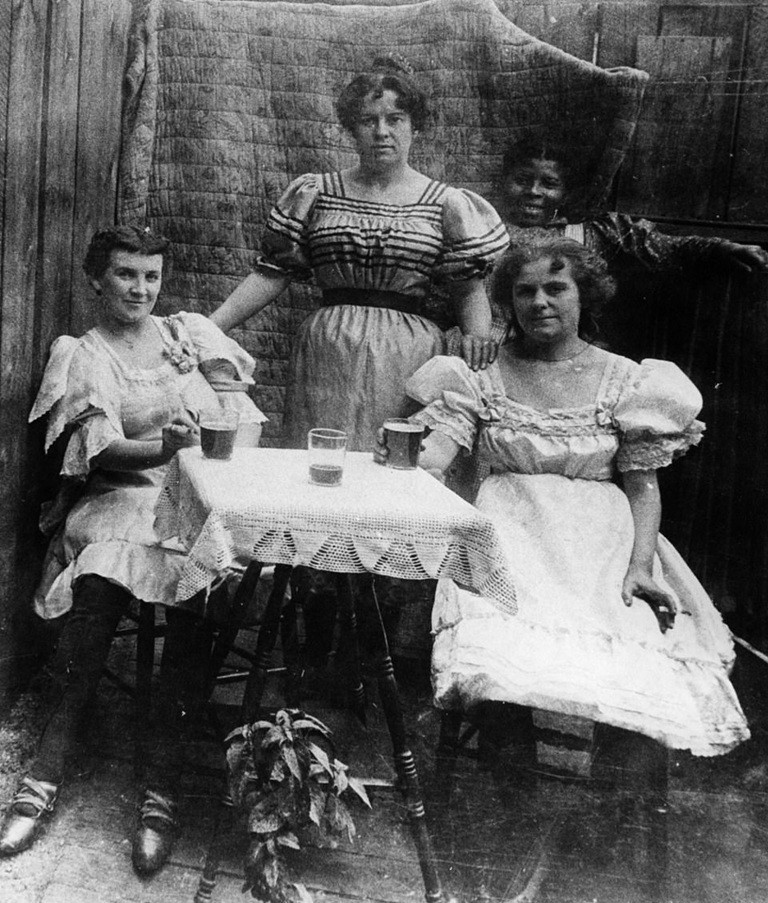
Courtesans quickly became fixtures of frontier life. They were spoken about openly, recognized on the street, remembered by name. In places like Dodge City, Deadwood, Tombstone, Virginia City, and San Francisco, everyone knew where the women lived and how much they charged.
The Women Who Chose the Frontier
Contrary to popular myth, many Wild West courtesans were not forced into the profession. Some were, especially among the poorest and youngest, but a large number made a calculated decision. For women in the 19th century, options were brutally limited. Factory work paid starvation wages. Domestic service meant obedience, vulnerability, and often sexual exploitation without payment. Marriage offered security only if luck allowed.
Prostitution, dangerous as it was, offered something radical: money, mobility, and choice.
Women arrived from New York, New Orleans, Europe, Mexico, and China. Some had already worked in brothels back east. Others reinvented themselves entirely upon arrival. Names changed. Histories disappeared. On the frontier, identity was flexible.
Where Sex Was Sold
Sex in the Wild West did not happen randomly. It happened in specific spaces designed to manage risk, money, and reputation. The most common setting was the saloon, where women worked openly, drinking with customers, flirting, touching, and negotiating. The actual sex usually happened upstairs or next door, in small rooms with beds that were rarely clean and almost never private from sound.
More organized were brothels, often called “parlor houses.” These establishments were run by madams who controlled schedules, prices, and behavior. The best houses were clean, discreet, and surprisingly strict. Violence was bad for business, and successful madams enforced rules with absolute authority.
In larger cities like San Francisco, Denver, and New Orleans, high-end courtesans met clients in hotels or private apartments. These arrangements closely resemble modern escorting, including advance negotiation, discretion, and emotional performance.
The Price of Intimacy
Money governed everything. Prices were well known and rarely negotiated downward. In the 1860s and 1870s, a quick encounter could cost as little as one dollar, while a standard brothel visit ranged between two and five. High-class courtesans charged ten dollars or more, and overnight stays could reach fifty dollars or higher.
These sums were enormous for the time. A cowboy earning thirty dollars a month might spend half of it in one night. Yet many did. After months of physical labor, danger, and isolation, money lost its meaning compared to pleasure.
Payment was always upfront. No exceptions. This rule protected women and ensured clarity. Once paid, time was measured carefully. Fifteen or thirty minutes was standard unless more was agreed upon. When time ended, the encounter ended.
What Sex Was Actually Like
Sex in the Wild West was not romantic. It was practical, rushed, and shaped by hygiene, alcohol, and exhaustion. Most encounters were brief and focused on release rather than exploration. Oral sex existed, but many men considered it improper or unfamiliar. Positions were limited by space and furniture. Fantasy was less elaborate than modern imagination suggests.
What mattered more than technique was control. For men living violent, unstable lives, sex offered dominance and certainty. For women, it was performance. They learned how to flatter, soothe, pretend interest, and create the illusion of intimacy without giving too much of themselves away.
High-end courtesans were valued not only for their bodies, but for their ability to listen. Many men talked more than they touched.
Protection in a Violent World
Despite the Wild West’s reputation, organized sex work was often safer than life outside it. Well-run brothels employed guards or relied on alliances with sheriffs, gamblers, and gunmen. A client who became violent risked severe consequences, including beatings, expulsion, or worse.
Many women carried weapons. Small pistols, knives, and sharpened hatpins were common. But the strongest protection was reputation. A brothel known for defending its women quickly became respected, even feared.
Independent women working alone faced far greater danger. Assault, theft, and murder were real risks, especially in isolated mining camps.
Pregnancy, Disease, and the Limits of Control
Contraception in the 19th century was primitive but not nonexistent. Condoms made from animal intestines were available and commonly used in higher-end houses. Some brothels required them, understanding that disease was bad for business. Douching and herbal remedies were also practiced, though unreliable.
Pregnancy was common, particularly among lower-status women. Some continued working until they could not hide it. Others left town, sought dangerous abortions, or gave children up for adoption. A few raised children quietly, supported by their earnings.
Sexually transmitted diseases were widespread. Syphilis and gonorrhea affected both men and women, often permanently. Experienced madams inspected workers regularly, not out of compassion but necessity.
Famous Names and Real Lives
Some women became legends. Belle Cora ran one of San Francisco’s most famous brothels during the Gold Rush, entertaining politicians and businessmen before being shot dead in 1862. Ah Toy, a Chinese madam, used the legal system aggressively to protect her business and became a wealthy property owner in a society hostile to both women and immigrants.
In Tombstone, Big Nose Kate lived openly as Doc Holliday’s partner, drinking, gambling, and surviving on her own terms. In Denver, Mattie Silks amassed a fortune that rivaled male entrepreneurs of her era.
These women were not exceptions. They were examples of what was possible.
Morality, Hypocrisy, and Power
Publicly, prostitution was condemned. Churches preached against it. Newspapers pretended to be scandalized. Privately, towns depended on it. Lawmen collected fines instead of making arrests. Politicians accepted bribes. Courtesans donated money to schools, hospitals, and disaster relief.
Everyone knew where the brothels were. Everyone knew who worked there. Pretending otherwise was part of the social contract.
The End of the Frontier Courtesan
By the 1890s, the Wild West began to disappear. Railroads brought regulation. Towns became cities. Victorian morality tightened its grip. Red-light districts were pushed underground or destroyed.
But sex work did not vanish. It adapted.
The structure, negotiation, discretion, and emotional labor practiced by Wild West courtesans are still recognizable today. Modern escorting is not a new invention. It is an evolution.
Where Survival, Sex, and Power Met
The courtesans of the Wild West were not side characters in history. They were central figures in the survival and growth of frontier society. In a world that offered women almost no legal power, they created their own. They negotiated desire, money, and danger with intelligence and resilience.
The American West was built not only on guns and gold, but on sex and on the women who understood its value better than anyone else.